Choosing between continuous lighting vs strobes is one of those decisions that feels simple on the surface, and strangely complicated once you’re actually on set. Ask five photographers or creators what they prefer, and you’ll likely get five different answers, each delivered with total confidence.
The truth is, both continuous lights and strobes are professional tools. Both are capable of producing stunning results. And both can also be incredibly frustrating if they’re used in the wrong context.
We see this confusion every week. In our Dubai studios, we work with both continuous lighting and strobes, often on the same day, sometimes even in the same shoot. Content creators walk in with video in mind and leave needing stills. Brands arrive planning product photography and suddenly want behind-the-scenes reels. The “right” lighting choice shifts faster than most people expect.
This guide isn’t here to crown a winner. It’s here to help you choose confidently, based on how you actually shoot, not on internet debates or outdated rules.
Continuous vs Strobes: Key Differences at a Glance
Before diving deeper into continuous lighting vs strobes, it helps to reset expectations. This is a reminder, not a technical breakdown.
Continuous lighting
- Always on: what you see is what you get
- Used for photo, video, or both
- Lets you judge light, shadows, and mood in real time
Strobes
- Flash only fires when you take the photo
- Designed purely for still photography
- Extremely powerful and precise
Both approaches can be clean, cinematic, soft, dramatic, or bold. The difference isn’t quality, it’s workflow and control.
Continuous Lighting vs Strobes: Pros and Cons
When comparing continuous lighting vs strobes, the biggest mistake people make is looking at specs instead of experience. The pros and cons below are about what it feels like to work with each system on a real shoot.
Advantages of Continuous Lighting
One of the biggest reasons continuous lighting has exploded in popularity is simplicity. You turn it on. You see the light. You adjust until it looks right.
For creators who work visually, and especially for anyone doing video, this is powerful. There’s no mental translation between what the light will do and what it’s doing right now.
Continuous lighting also makes collaboration easier. Clients, models, makeup artists, and directors can all see the lighting as it happens. There’s less guessing, fewer test shots, and more confidence on set.
Another major advantage is versatility. Continuous lights work for:
- YouTube videos
- Reels and TikTok
- Podcasts
- Product demos
- Portraits and lifestyle photography
For many modern creators, continuous lighting becomes the backbone of their setup.

Advantages of Strobes
Strobes excel where precision and power matter most. If you shoot stills professionally, fashion, commercial portraits, product photography, advertising, strobes offer control that continuous lights struggle to match. You can overpower daylight, freeze motion perfectly, and sculpt light with extreme accuracy.
Another often overlooked advantage is efficiency. Because strobes fire for a fraction of a second, they generate far less heat and use less energy during long sessions. Models aren’t sitting under hot lights, and gear stays cooler.
For photographers who value consistency across large shoots, strobes remain a gold standard.
Limitations of Strobes (Where They’re Harder to Use)
Despite their strengths, strobes aren’t always friendly, especially for beginners. You can’t see the light until after the photo is taken. That disconnect can slow learning and make small adjustments feel tedious. For hybrid shoots that include video, strobes are simply not an option.
Strobes also require more coordination: triggers, sync settings, power ratios, and sometimes a steeper learning curve. For small teams or solo creators, this complexity can become friction.
Limitations of Continuous Lighting (Where It Struggles)
Continuous lighting struggles most when raw power is required. Bright daylight, large spaces, or high-speed action can quickly expose its limits. To match the output of a strobe, continuous lights often need to be large, expensive, and power-hungry.
They can also be physically demanding. Long sessions under bright continuous light can cause eye fatigue or discomfort, especially for portrait subjects. This is why continuous lighting vs strobes is less about “better” and more about fit.
Key Differences Between Continuous Lighting and Strobes
When photographers search for strobe vs constant lighting photography or flash vs continuous light for photography, they’re usually trying to understand how the experience changes on set. This is where the real differences show up.

Power and Output (How Bright Each One Really Is)
Strobes are dramatically more powerful. A single strobe can overpower harsh sunlight and still give you clean, controlled results.
Continuous lights, even strong ones, rarely compete at that level. They rely more on environment control, dimming ambient light, controlling windows, or shooting at night. If your work involves bright locations or outdoor shoots, strobe lighting vs continuous becomes a clear decision.
Freezing Motion vs Showing Motion Blur
Strobes freeze time. Fast movement, splashes, flying hair, action shots, all benefit from the ultra-short flash duration. Continuous lighting shows motion as it happens. That can be beautiful for creative blur or cinematic effects, but it won’t replace strobes for action photography. This difference alone explains why sports and fashion photographers still rely heavily on strobes.
Working with Ambient Light
Continuous lights blend naturally with ambient light. Window light, lamps, neon signs, they all work together in a predictable way. Strobes dominate ambient light. You decide how much of the environment appears, and how much disappears. Neither approach is wrong. They simply tell different visual stories.
Comfort for Real People on Set
This factor matters more than most people admit. Strobes are brief and non-intrusive. Continuous lights can feel intense over time. For long portrait sessions or sensitive subjects, comfort can affect expressions and performance. This human element often influences the strobe vs continuous debate more than specs ever will.
Video & Hybrid Shoots (Photo + Video on the Same Setup)
Here’s where continuous lighting pulls ahead. If you shoot both photo and video, strobes create limitations. Continuous lighting allows seamless transitions between formats, consistent mood, and faster production. For modern creators, this alone often decides the continuous lighting vs strobes question.
Portability, Setup Time, and Learning Curve
Continuous lights are intuitive. Strobes are precise but require more setup knowledge. Beginners often feel productive faster with continuous lighting. Experienced photographers often feel more powerful with strobes. Neither path is superior; it depends on where you are in your creative journey.

Which One Fits Your Use Case?
Instead of asking which is better, it’s more useful to ask: better for what?
Below are common real-world scenarios where strobe lights vs continuous lights for photography diverge.
- Video-First Creators
If video is your primary output, YouTube, social media, podcasts, continuous lighting is the clear choice. It simplifies workflow and keeps visual consistency.
- Stills-First Photographers
For photographers focused on portraits, fashion, or commercial work, strobes offer unmatched control and efficiency.
- Hybrid Creators and Small Brand Teams
Hybrid teams benefit from flexibility. Many choose continuous lighting first, then add strobes as projects scale.
- Studio Owners and Frequent Renters
Studios often stock both. Different clients need different tools, and flexibility becomes a competitive advantage.
Decision Checklist: Continuous vs Strobes
If you’re still deciding between strobe vs flash or continuous light, this checklist helps clarify fast.
Choose continuous lighting if:
- You shoot video regularly
- You want WYSIWYG lighting
- You work solo or in small teams
- You value speed and simplicity
Choose strobes if:
- You shoot stills professionally
- You need maximum power
- You work in bright environments
- You want precise control over ambient light
Many professionals eventually use both strobe and continuous lighting, depending on the project.

Common Mistakes When Choosing Between Continuous Lighting and Strobes
One of the most common mistakes photographers make is choosing lighting based on trends instead of actual needs. Many people invest in strobes while their projects require video, only to realize later that flash-based lighting limits their workflow. On the other hand, some creators rely solely on continuous lighting in large or bright spaces, where the lack of power makes control difficult.
Another frequent issue is overbuying equipment for short-term projects. Purchasing lights that are only needed occasionally often leads to unnecessary costs and storage problems. Some photographers also focus too much on brand names rather than understanding light behavior, modifiers, and placement. In reality, knowing how to shape light matters far more than the logo on the gear. Avoiding these mistakes starts with understanding your workflow and choosing lighting that supports it, not complicates it.
Creative Psychology: How Lighting Affects Decision-Making on Set
Lighting doesn’t just shape how an image looks, it shapes how a shoot feels. Continuous lighting lets everyone on set see the result in real time, making decisions faster and encouraging more experimentation. Strobes, on the other hand, slow the process down in a good way.
They push photographers to plan more carefully and work with intention. Neither approach is better on its own. The best results come when your lighting choice matches how you like to work, allowing you to focus less on technical adjustments and more on creating images that feel right.
Budget, Scalability, and Long-Term Investment
How your lighting choice scales over time is one aspect that is sometimes disregarded in the debate between strobes and continuous illumination. Continuous lighting systems are appealing to new designers since they often have a reduced entry barrier.
However, upgrading continuous lights to attain better output can become expensive and space-intensive as production increases and demands rise. Strobes tend to scale more effectively for professional stills, especially in commercial settings where consistency and repeatability are important, even though they can require a larger initial investment. Expensive pivots later on can be avoided by looking beyond the first purchase and evaluating where your work will be in a year or two.
A Studio Built for Both Continuous Lighting and Strobes
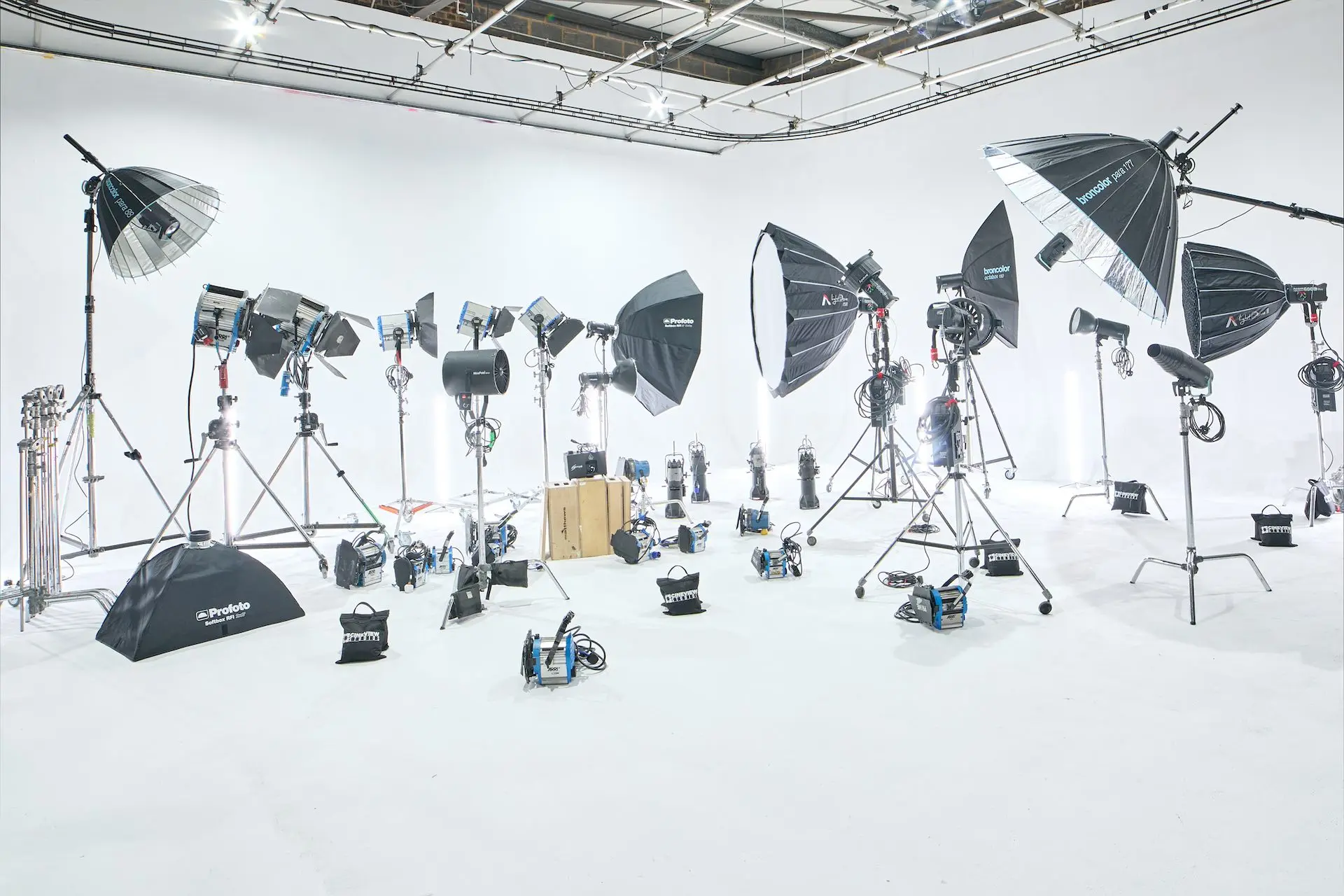
For contemporary photographers, filmmakers, and content teams that require flexibility without sacrificing quality, Helio offers a creative studio environment. If your work demands flexibility, quality, and complete creative control, Helio offers an environment designed to support exactly that. Based in Dubai, Helio provides access to a full range of up-to-date, professional photography and filmmaking equipment available for rent, without long-term commitments or unnecessary costs.
From professional cameras and lenses to advanced continuous lighting, strobes, modifiers, grip equipment, and production accessories, everything at Helio is carefully maintained and ready to perform. You work with the tools you choose, when you need them, at competitive rental rates that make professional production more accessible.
Beyond equipment, Helio offers five fully equipped studios, each designed for different shooting needs. Whether you’re working on product photography, fashion, food, commercial content, interviews, or hybrid photo-video projects, you can rent a studio space that fits your vision and workflow, all in one location.
If you’re looking for a professional, well-equipped space in Dubai where your ideas can move freely, Helio is built to support your process, without getting in the way of it.
A Clear Takeaway Before You Choose Your Setup
If your work is mainly video or hybrid content, continuous lighting offers speed, flexibility, and a smoother creative flow. If your focus is high-end still photography that demands power, precision, and consistency, strobes remain the stronger choice. Many professionals eventually use both, depending on the project.
What matters most is not owning every tool, but having access to the right one at the right time. Choosing lighting that matches your shooting style will make your workflow faster, your results more consistent, and your creative process far more enjoyable.