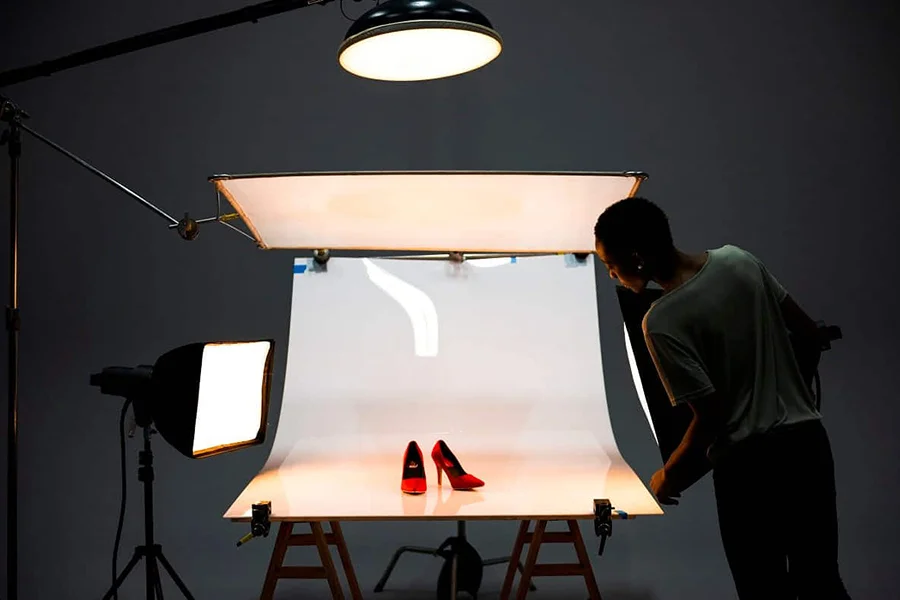
Photography may seem straightforward, but small details can completely change how a product appears. In Dubai, where visual standards are high and competition is intense, every choice matters. Lighting, styling, and camera settings play a role, yet the backdrop quietly shapes the final image.
Choosing the right backdrop isn’t about following trends, it’s about practical decisions that suit your product, brand, and the platforms where your images will appear. This guide provides clear options, real use cases, and quick comparisons to help you make those choices with confidence.
Quick Picks: Best Product Photography Backdrops by Scenario
If you want fast direction before going into details, this section is designed to help you narrow down choices quickly. Below is a table highlighting some of the best product photography backdrops based on common shooting needs, making it easier to match the right option to your situation.
| Best For | Backdrop Type | Who It’s For | Why It Works |
| Overall use | Seamless paper or matte vinyl | Brands shooting regularly | Clean look, consistent results, easy to repeat |
| Beginners | Paper backdrop | Small businesses and startups | Affordable, simple, and easy to replace |
| Messy products | Wipe-clean vinyl | Food, cosmetics, liquids | Can be cleaned quickly between shots |
| Reflective products | Matte surface with soft diffusion | Jewelry, electronics, glass | Reduces harsh reflections |
| Lifestyle texture | Subtle wood or marble | Home, fashion, decor brands | Adds mood without overpowering |
| Flat lays | Rigid boards or tiles | Social media and catalogs | Stable surface, fast setup |
When comparing options, brands usually discover that the best product photography backdrops are those that remain visually consistent, stay clean during repeated use, and do not slow down the shooting process.
Why Use Product Photography Backdrops (What It Improves)
A backdrop is more than just a surface behind your product—it shapes how viewers perceive it. Even if they don’t consciously notice it, the right backdrop makes the image feel balanced and professional.
Here’s what it delivers in practice:
- Keeps focus on the product: Avoid distractions and help viewers understand the product instantly.
- Supports brand consistency: Using similar styles across shoots builds recognition and trust.
- Simplifies editing: Smooth colors and clean edges reduce post-production work.
- Highlights product details: Proper contrast and subtle texture bring out shape, material, and color.
- Fits your platform: Neutral, even backgrounds work for marketplaces, while subtle textures can add personality for social media or lifestyle campaigns.
The key is choosing a backdrop that fits the product, the brand’s tone, and the intended platform, practical, reliable, and visually consistent.

What’s the Best Backdrop for Product Photography?
There is no single backdrop that suits every product, but some materials are far more dependable than others. Here are the main backdrop types, explained with clear use cases.
Paper Backdrops
Paper backdrops are smooth, affordable, and widely available. They usually come in rolls and can be trimmed as needed.
Best for:
- Small and medium-sized products
- Clean catalog imagery
- Online marketplaces
Paper is often considered the best white backdrop, especially for e-commerce platforms that require pure white backgrounds with minimal texture.
Vinyl Backdrops
Vinyl backdrops are flexible sheets designed for durability. They resist stains and can be wiped clean quickly.
Best for:
- Food products
- Skincare and cosmetics
- Items that spill or stain
- High-volume shoots
Vinyl is often chosen by brands that shoot regularly and need something practical that holds up over time.
Fabric or Muslin Backdrops
Fabric backdrops provide a softer and more natural look. They are washable, but they require careful handling.
Best for:
- Lifestyle product imagery
- Handmade or artisanal items
- Story-driven visuals
Wrinkles and folds can be an issue, so fabric backdrops need proper storage and preparation.
Rigid Boards or Tiles
Rigid boards are solid surfaces that work well for tabletop setups and flat lays.
Best for:
- Social media content
- Printed catalog images
- Small product arrangements
They are easy to move, quick to set up, and simple to store.
Acrylic or Plexiglass Backdrops
Acrylic backdrops introduce reflections that can make products appear sleek and premium.
Best for:
- Luxury packaging
- Electronics
- High-end accessories
Lighting control is essential to avoid unwanted reflections and glare.
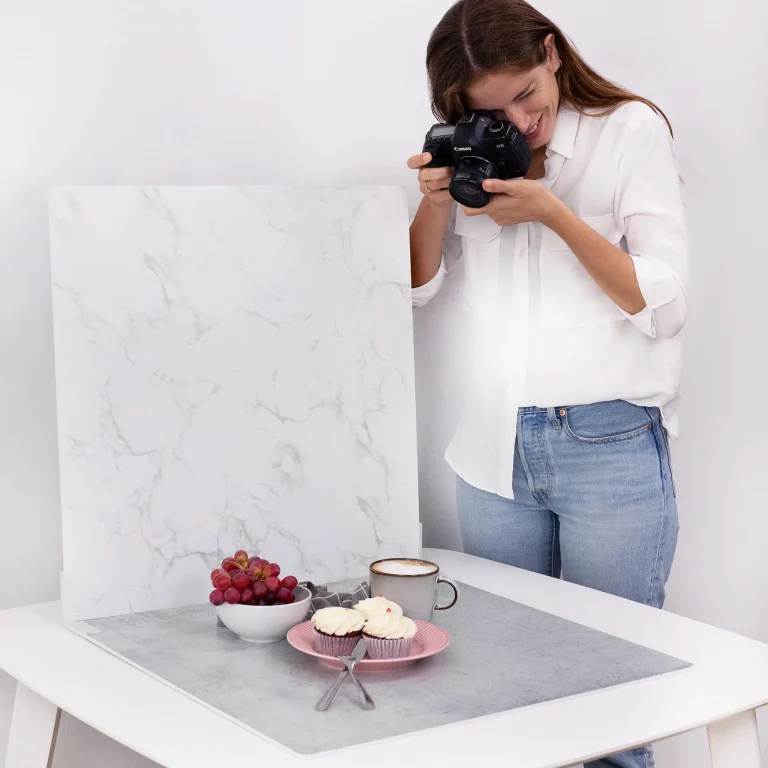
Textured Surfaces (Wood, Marble, and Similar)
Textured backdrops add atmosphere but should be used with restraint.
Best for:
- Home decor
- Fashion accessories
- Select lifestyle campaigns
Too much texture can distract from the product itself.
Some studios use roll backdrops on stands for flexibility, while professional studios in Dubai often install fixed or roller systems to save time. The most important factor is choosing a backdrop you can keep clean and use repeatedly.
How to Choose the Best Backdrop for Product Photography
Selecting the ideal backdrop can be challenging for brands. With numerous options available, each may seem fine individually. The real task is finding a backdrop that remains consistent across various products, lighting, and platforms. A well-chosen backdrop streamlines your workflow, whereas a poor one leads to more editing, reshoots, and frustration.
The following considerations focus on real-world use rather than theory, helping you narrow down options with confidence.
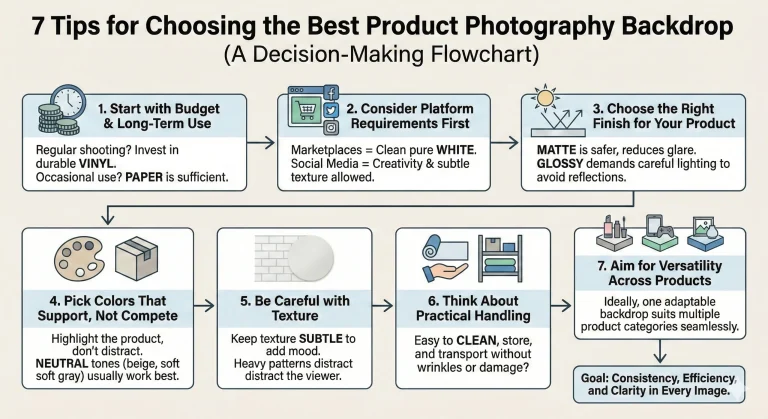
1. Start with Budget and Long-Term Use
Before looking at colors or textures, it helps to be honest about budget and frequency of use. If product photography is a regular activity, investing in durable materials makes sense. Vinyl and rigid boards often cost more upfront but last longer. For occasional shoots, paper may be enough.
Many brands find that the best backdrops are those that offer consistent, reliable results, rather than simply being the cheapest or the most expensive.
2. Consider Platform Requirements First
Different platforms have very different expectations. Marketplaces usually require clean white backgrounds with no distractions. Social media and advertising campaigns allow more creativity and lifestyle elements.
If your images are mainly for online marketplaces, the best white backdrop for product photography is usually paper because it creates a smooth, even surface that is easy to edit. For social platforms, color and texture become more relevant, as long as they do not overpower the product.
3. Choose the Right Finish for Your Product
Surface finish affects how light behaves in the image. Matte finishes reduce glare and make lighting easier to control, especially for reflective or glossy products. Glossy backdrops can look striking but demand careful lighting to avoid reflections and hotspots.
For many categories, matte surfaces are considered among the best product photography backdrops because they keep attention on the product rather than the background.

4. Pick Colors That Support, Not Compete
Choosing the best color backdrop is more about achieving balance than personal preference. The backdrop should highlight the product’s shape and color without drawing attention to itself. Neutral shades such as white, beige, and soft gray work well for most products and brands.
Bold colors can be effective for campaigns or seasonal content, but they should be used deliberately and tested before committing to them across a full product range.
5. Be Careful with Texture
Texture can add warmth and context, especially for lifestyle products, but it should be used with restraint. Subtle wood or stone textures can work well, while heavy patterns often distract the viewer.
When in doubt, smoother surfaces tend to perform better and are more forgiving, which is why they are often chosen as the best backdrop for product photography in commercial settings.
6. Think About Practical Handling
A backdrop that looks great but is difficult to store, clean, or transport will slow down production. Wrinkled fabric, fragile surfaces, or bulky materials can become daily obstacles.
Practical considerations are one reason why vinyl and paper are frequently listed among the best product photography backdrops for businesses that shoot often.
7. Aim for Versatility Across Products
The most effective backdrops work across multiple product categories. A single neutral backdrop that suits skincare, accessories, and packaged goods is far more valuable than a highly specific option.
For most brands, the ideal backdrop is one that easily adapts to various products without requiring major lighting or styling adjustments. By considering budget, platform requirements, finish, color, texture, and practicality, selecting the best backdrop becomes much simpler. The aim is not perfection, but consistency, efficiency, and clarity in every image.
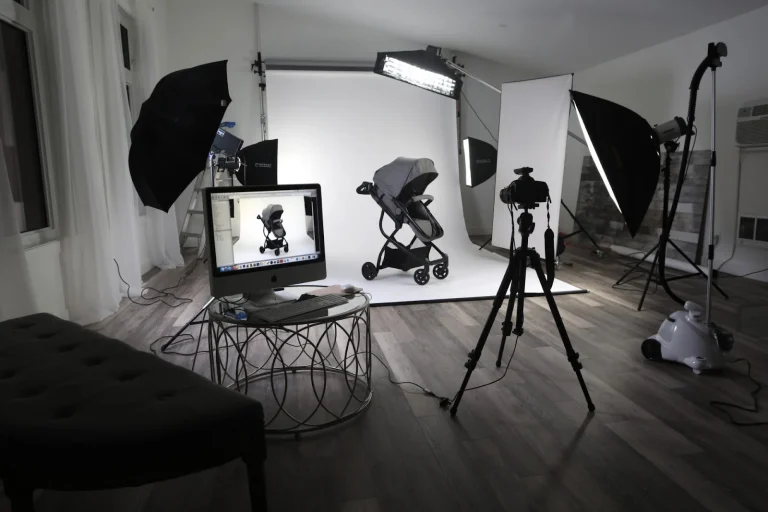
Quick Checklist for Choosing
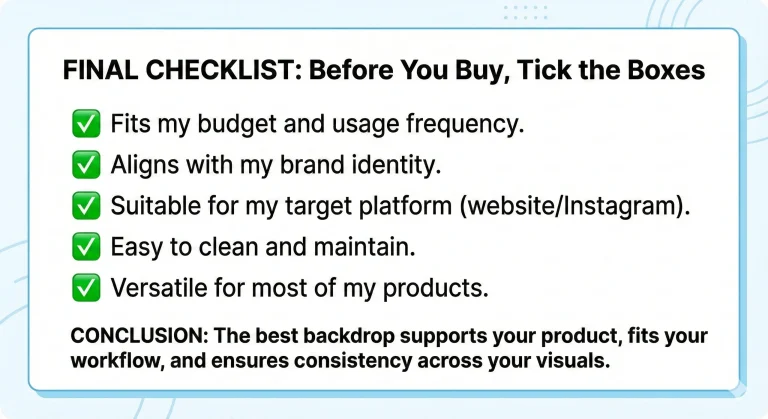
Before finalizing a backdrop, run through these essentials. They keep your shoot smooth and your images consistent:
- Budget-friendly for repeated use: Invest in materials that last without breaking the bank.
- Reflects your brand: Color, texture, and finish should align with your brand identity.
- Platform-appropriate: Clean, neutral for marketplaces; creative textures allowed for social media.
- Easy to clean and maintain: Wrinkles, stains, or fragile materials slow production.
- Simple to store and transport: Choose something practical for your studio or on-location shoots.
- Versatile across products: One adaptable backdrop saves time and effort.
Quick tips: Neutral tones usually work best. Paper is ideal for pure white requirements, while vinyl is practical for long-term, high-volume shoots. Always check lighting, uneven light can make even white backdrops appear gray.
A Practical Move for Brands in Dubai Ready to Upgrade Their Visuals
Selecting the best backdrop is an important step, but it’s just one part of creating strong visual content. Many Dubai-based brands face challenges not with individual choices, but with maintaining consistency across campaigns and platforms. This is where professional support comes in.
Helio, a Dubai-based marketing and advertising agency, partners with brands to ensure that photography aligns seamlessly with their broader brand strategy. From visual direction to campaign execution, Helio helps businesses present their products clearly and professionally in a competitive market.
Bringing It All Together
A backdrop may seem like a minor detail, but it greatly influences how a product is perceived and remembered. The best backdrop supports the product, fits the shooting workflow, and remains consistent over time.
By focusing on practical needs rather than trends, brands can enhance visual quality without unnecessary complexity.