Computer-Generated Imagery (CGI) has moved from a niche creative technique to a foundational tool in modern fashion advertising. As brands face tighter timelines, heavier content demands, and increasing performance pressure across platforms, CGI offers a way to build campaigns that are faster, more controlled, and easier to scale.
This guide breaks down how CGI fashion campaigns actually work, from use cases across the funnel to real campaign formats, workflows, costs, and safety considerations, without hype or technical overload. Whether you’re planning a scroll-stopping launch, performance-driven product visuals, or a long-term brand system, this article shows how Computer-Generated Imagery can be used intentionally to support real marketing goals, not just create impressive visuals.
Why Fashion Brands Use CGI in Fashion Campaigns Today
Fashion brands use CGI in campaigns today because it delivers speed, control, and scalability in an environment where content demands change fast. Instead of coordinating locations, models, and reshoots, teams can build a single digital asset and adapt it endlessly across channels and formats. CGI allows brands to maintain visual consistency, experiment creatively without added risk, and respond quickly to market shifts, while reducing production complexity and uncertainty.
For brands competing in scroll-heavy, performance-driven spaces, CGI offers a reliable way to launch faster, look sharper, and stay flexible throughout the campaign lifecycle.
CGI helps fashion brands move faster and stay consistent, without the usual production bottlenecks.
- Faster launch cycles: Skip complex scheduling, last-minute cancellations, and costly reshoots, go from concept to publish quicker.
- Controlled visuals: Lock in lighting, environments, and product accuracy so every asset looks intentional and on-brand.
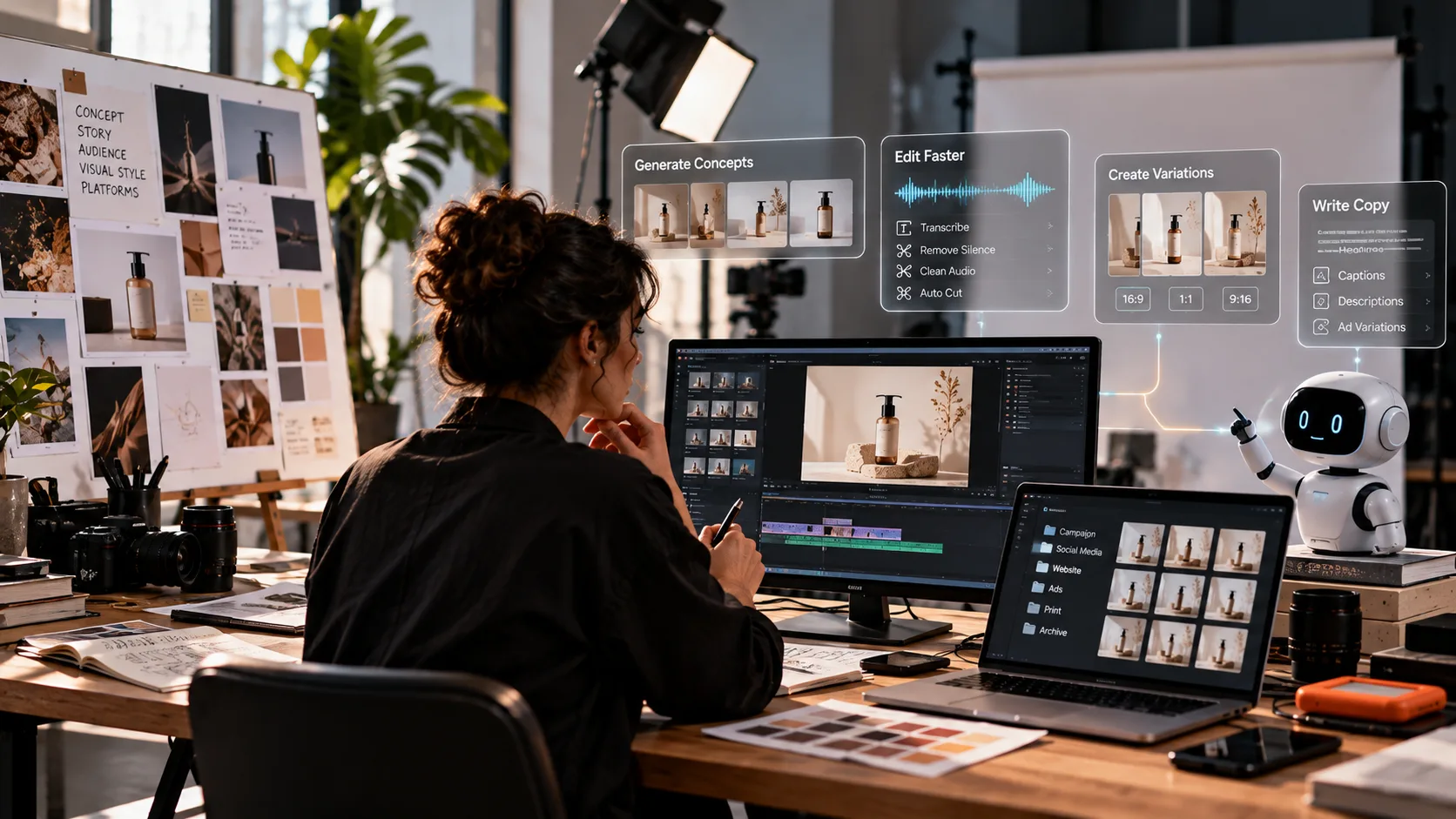
- Scalable ad variants: Generate 9:16, 1:1, and 16:9 cuts from one master build, without rebuilding the entire shoot.
- Higher shareability: Deliver clean, scroll-stopping visuals that are easier to save, share, and remember.
- Reduced shoot logistics: Minimize location/set needs, travel costs, weather risk, and on-site production complexity.
CGI doesn’t just change how assets are made; it improves how campaigns perform operationally and creatively.
- More predictable output: Visual consistency stays steady across platforms, regions, and timelines.
- More flexibility mid-campaign: Adjust angles, backgrounds, lighting, or compositions without restarting production.
- More content from one core build: Expand into multiple placements and formats while keeping the look unified.
- Less friction for teams: Fewer moving parts means smoother approvals, fewer delays, and simpler coordination.
Don’t Confuse CGI With AI: Quick Clarity for Fashion Ad Teams
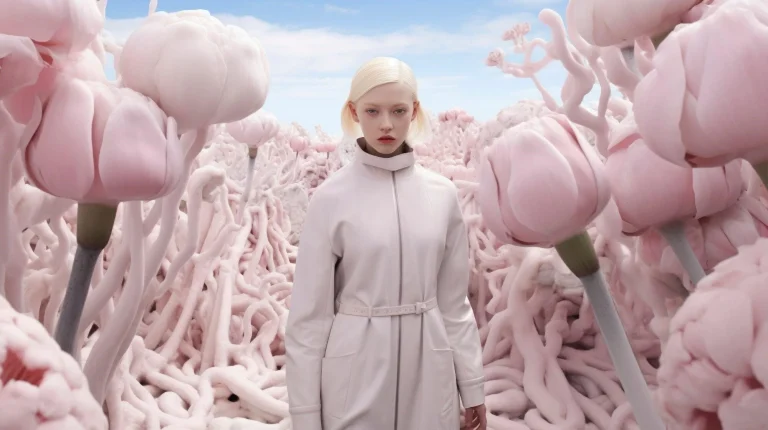
In fashion advertising, CGI, AI, VFX, and 3D are often mixed up, but they serve very different purposes. CGI is about creating controlled, photoreal visuals of products, spaces, or scenes that do not need a physical shoot.
It is planned, intentional, and brand-led. AI, on the other hand, is used to generate or modify content based on patterns, useful for speed and experimentation, but less predictable for precise brand visuals. VFX enhances or alters footage that already exists, while 3D is the underlying digital modeling that CGI builds upon.
For fashion campaigns, the distinction matters: CGI is chosen when brands need accuracy, consistency, and scalable assets across formats, without relying on real-world production. Understanding this difference helps teams choose the right approach, set realistic expectations, and trust the process behind high-quality CGI-led campaigns.
Learn More: how AR and CGI are transforming marketing campaigns in fashion and beauty industries
Best Uses of CGI in Fashion Industry (by Funnel Stage)
CGI in the fashion industry has evolved from a visual experiment into a practical campaign tool. Brands use CGI to create high-impact visuals that support real marketing objectives and deliver scalable, fast-to-produce content.
Awareness: Goal is to reach and drive shares. CGI assets like hero stills or high-impact films grab attention while maintaining the brand’s visual identity.
Consideration: Goal is to encourage engagement and product exploration. Detailed CGI visuals, hybrid assets, or interactive 3D allow users to examine products from multiple angles and engage deeply.
Conversion: Goal is to increase clicks and sales. CGI-enhanced stills, films, or hybrid assets keep focus on the product, making online shopping clearer and more compelling.
This approach makes CGI not just a visual upgrade but a performance-driven tool at every stage of the marketing funnel.
How to Choose the Right CGI Approach for Your Campaign Goals
When reviewing fashion CGI advertising examples, the right approach starts with clarity. First, define your constraints, including KPIs, timeline, approval layers, and whether the goal is awareness, storytelling, or commerce.
Next, confirm platforms and deliverables early, such as formats, cutdowns, and total asset volume. Then decide on the level of realism, choosing between stylized or photoreal visuals based on brand positioning and product detail requirements.
From there, execution should follow those constraints naturally. Campaigns that require many cutdowns benefit from a modular build, while tight deadlines are best supported by simpler environments.
When high detail accuracy is essential, photoreal product visuals become critical. Social-first campaigns seeking a strong “wow” factor often rely on FOOH executions, while commerce-driven goals are best served by interactive 3D or AR try-on experiences.
CGI fashion campaigns perform best when concept, realism, and deliverables are aligned with platform expectations. Locking styleframes early helps prevent unnecessary revisions and keeps production efficient.
Read more: To learn what is video marketing in digital marketing and how it supports high-impact campaigns like CGI fashion, explore our guide on using video strategically across the marketing funnel.
Fashion CGI Advertising Examples by Campaign Type
Fashion CGI advertising examples span multiple campaign needs, from headline-grabbing awareness to performance-driven commerce. Below is a practical breakdown of how fashion CGI marketing examples are used today, mapped to real campaign goals rather than abstract visuals.
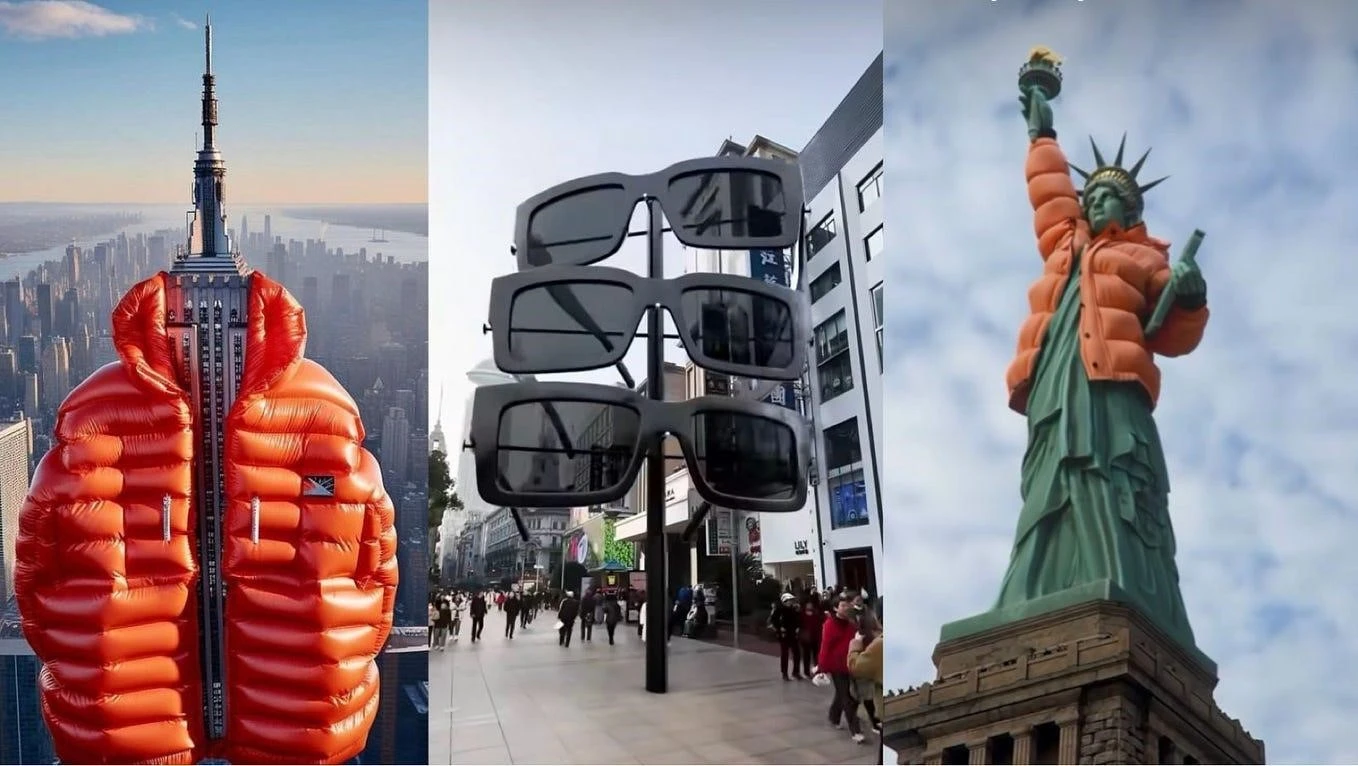
FOOH / Fake Out-of-Home Social Stunts
What it is: Digitally staged fashion moments placed into real-world locations and released as social-first content.
When to use: Awareness-driven launches where reach, shares, and earned media matter most.
Best platforms: Instagram, TikTok, X, paid social amplification.
Examples: Oversized accessories on city landmarks; floating handbags or shoes interacting with urban spaces.
Photoreal Product Films
What it is: Highly detailed CGI films focused on fabric texture, finish, movement, and construction.
When to use: Consideration and conversion, where clarity and product confidence impact CTR and CVR.
Best platforms: Paid social, product pages, landing pages, retail screens.
Examples: Beauty-like fabric close-ups; slow-motion garment movement without physical samples.
CGI Stills for Lookbooks & E-commerce
What it is: High-volume, consistent still imagery created from a single digital build.
When to use: Scale-heavy campaigns needing speed, consistency, and multiple SKUs or colorways.
Best platforms: E-commerce listings, catalogues, marketplaces, retargeting ads.
Examples: Full seasonal lookbooks; product grids generated without repeat photoshoots.
Hybrid Campaigns (Real Models + CGI)
What it is: Live-action photography or video combined with CGI environments or objects.
When to use: Brand storytelling where realism and imagination need to coexist.
Best platforms: Hero films, homepage takeovers, premium social placements.
Examples: Models styled in real garments within surreal or impossible digital settings.
Virtual Influencers & Avatars
What it is: Fully digital characters representing the brand across campaigns.
When to use: Long-term brand building, experimentation, or Gen-Z-focused awareness.
Best platforms: Instagram, TikTok, brand-owned channels.
Examples: Digital brand ambassadors wearing seasonal drops; avatar-led teaser campaigns.
AR Try-On / Interactive 3D
What it is: Interactive assets allowing users to explore or try products digitally.
When to use: Conversion support and post-awareness engagement.
Best platforms: Social ads, product pages, brand apps.
Examples: Virtual try-on for accessories; 3D product rotation embedded in ads.
Used intentionally, each CGI format serves a clear role, turning fashion creativity into measurable campaign performance.
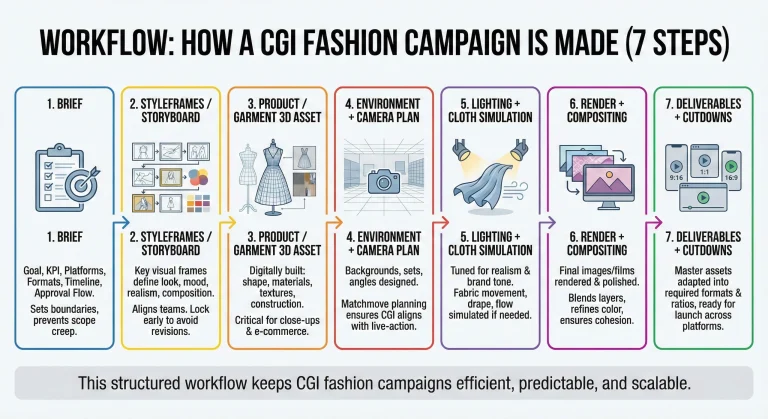
Workflow: How a CGI Fashion Campaign Is Made (7 Steps)
A CGI fashion campaign follows a clear, production-ready pipeline. Here’s how it typically comes together, without unnecessary complexity.
- Brief: Everything starts with a focused brief: campaign goal, KPI, platforms, formats, timeline, and approval flow. This step sets boundaries and prevents scope creep later.
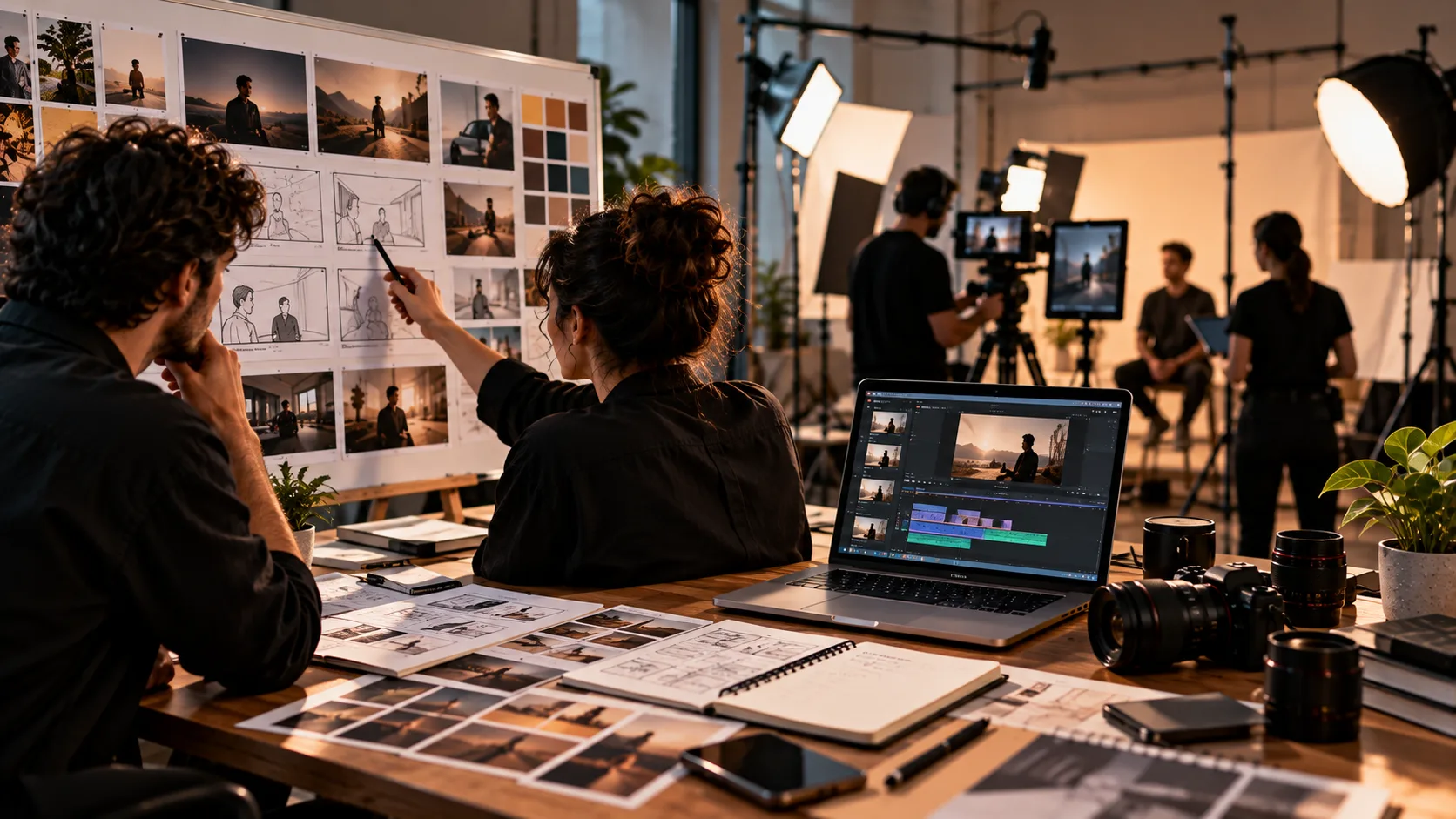
- Styleframes / Storyboard: Key visual frames define the look, mood, realism level, and composition. These frames align all teams before production begins.
Lock styleframes early to avoid costly revisions. - Product / Garment 3D Asset: The product is digitally built with attention to shape, materials, textures, and construction details, especially critical for close-ups and e-commerce use.
- Environment + Camera Plan: Backgrounds, sets, and camera angles are designed. If mixing with real footage, matchmove planning ensures CGI aligns naturally with live-action shots.
- Lighting + Cloth Simulation (if needed): Lighting is tuned for realism and brand tone. Fabric movement, drape, or flow is simulated where garments or soft materials are involved.
- Render + Compositing: Final images or films are rendered and polished. Compositing blends layers, refines color, and ensures everything feels cohesive and intentional.
- Deliverables + Cutdowns: Master assets are adapted into required formats and ratios, 9:16, 1:1, 16:9, ready for launch across platforms.
This structured workflow keeps CGI fashion campaigns efficient, predictable, and scalable.
CGI Fashion Advertising Costs: Pricing Tiers + Cost Drivers
One of the most common questions around CGI fashion campaigns is simple: how much does it cost? The answer depends on scope, realism, and deliverables, but most fashion CGI projects fall into three practical tiers.
Low Tier: Entry-Level CGI
This tier typically covers CGI stills or short, single-shot visuals. It’s best suited for e-commerce imagery, lookbooks, or social ads that need consistency and speed rather than spectacle. Brands often use this level when they need volume, multiple SKUs, colorways, or crops, without complex environments or motion. It’s a cost-efficient way to replace or supplement traditional photoshoots.
Mid Tier: Campaign-Ready CGI
The mid tier usually includes multi-shot product films or a mix of stills and short motion assets. This level works well for consideration and conversion campaigns where product detail, fabric movement, and controlled lighting matter. Brands choose this tier for paid social, product pages, and seasonal launches where clarity and polish directly impact performance metrics like CTR and CVR.
High Tier: Hero & Statement Campaigns
High-tier budgets are reserved for FOOH or hybrid campaigns, large-scale visuals designed to drive awareness and earned media.
These projects often involve complex environments, advanced motion, and cinematic composition. They’re used sparingly, usually for brand moments, major launches, or social-first stunts meant to travel far beyond paid placements.
Key Cost Drivers in CGI Fashion Campaigns
- Realism level: Stylized visuals cost less than photoreal execution
- Number of shots or seconds: More angles and longer films increase scope
- Cloth simulation: Fabric movement adds time and complexity
- 3D asset readiness: Clean, existing assets reduce build time
- Deliverables & formats: More cutdowns and ratios raise production load
- Revisions & turnaround: Late changes and tight timelines drive cost up
Fashion CGI Ads: Safety & Legal Checks
As fashion CGI advertising becomes more realistic and widespread, brands need to balance creative impact with responsibility. The impact of CGI marketing on brand advertising isn’t only visual, it also affects trust, legality, and public perception. Before launch, teams should review campaigns through three practical lenses.
1) Trust: Don’t Let Realism Backfire
Highly realistic CGI can blur the line between what’s real and what’s digitally constructed. If audiences feel misled, the reaction can shift from admiration to skepticism. This risk is higher with FOOH-style content or hyper-real product scenes. In some cases, subtle disclosure, such as behind-the-scenes content, captions, or context, helps maintain transparency without reducing impact.
The goal isn’t to explain the tech, but to avoid making audiences feel tricked once they realize what they’re seeing.
2) Rights: Locations, Permits, and Public Spaces
Even when environments are digitally created, FOOH-style visuals often reference real landmarks, streets, or buildings. This can raise questions around location rights, brand adjacency, and implied permissions. Using recognizable spaces may still trigger legal or reputational issues if not reviewed properly. Fashion teams should involve legal early to assess whether a CGI placement could be interpreted as unauthorized use of a location or public space, especially when content goes viral and reaches beyond paid media.
3) Representation: CGI Is Not a Shortcut
Virtual models and avatars can expand creative options, but they shouldn’t replace real diversity. Over-reliance on digital characters can be perceived as avoiding inclusive casting rather than supporting it. Audiences are increasingly sensitive to representation, and using CGI to “smooth out” reality can create backlash.
CGI should enhance storytelling, not erase real people, bodies, or identities from fashion narratives.
Before publishing, align creative, legal, and brand teams around these checks. Use a pre-publish checklist.
Read more: To understand what is creative concept and how it shapes effective CGI fashion campaigns, explore our guide on defining, structuring, and applying creative concepts in modern marketing.
Why Fashion Brands Partner with Helio for CGI That Actually Performs?
Helio works with fashion brands that want CGI campaigns to perform, not just look impressive. As part of its commercial video production dubai services, Helio supports brands from early concept alignment to final cutdowns, helping translate campaign goals into clear CGI executions that fit timelines, platforms, and budgets.
The focus is practical: defining the right realism level, locking styleframes early, and building assets that scale smoothly across social, e-commerce, and paid media.
What sets Helio apart is its campaign-first mindset. Instead of treating CGI as a visual experiment, the team approaches it as a production system designed to reduce friction, speed up approvals, and deliver consistent results across formats.
Whether it’s a product-led CGI film, a high-impact FOOH moment, or scalable stills for performance ads, Helio helps fashion teams launch faster, stay in control, and avoid costly revisions.
If you’re planning a CGI-led fashion campaign and want clarity on scope, cost, or execution, Helio’s experience in commercial video production dubai helps teams assess the right approach before production begins.
Why CGI Has Become Essential to Modern Fashion Advertising
CGI has become essential in fashion advertising by enabling faster launches, consistent visuals, and scalable content across platforms. When guided by clear goals, structure, and safeguards, it strengthens strategy and creativity rather than replacing them, helping brands stay competitive and efficient.