Beauty advertising has always lived at the intersection of imagination and reality. For years, brands relied on glossy photography, heavy lighting setups, and long production days to show glow, texture, and color payoff.
Today, things look a little different. CGI beauty campaigns are quietly changing how skincare, makeup, and haircare products are introduced to the world, especially in fast-moving markets like Dubai and the wider UAE.
In a region where luxury expectations are high and digital-first audiences move fast, brands need visuals that feel premium, controlled, and memorable. This guide explains what CGI-driven beauty visuals involve, why they resonate with beauty brands, and how real campaigns from both global and regional names are putting them to work today.
What Is CGI Beauty in Advertising?
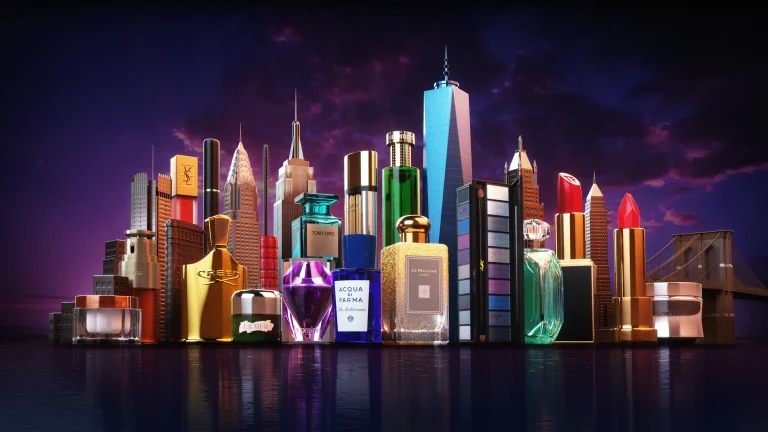
CGI in beauty advertising allows brands to show what a product does without being limited by studio constraints, weather, or even physics. From serum droplets floating in mid-air to lipstick textures revealed in extreme macro, CGI beauty ads are becoming a familiar sight across social feeds, billboards, and product launches.
CGI Beauty Meaning
Its meaning is the use of computer-generated imagery to create visuals specifically for beauty and personal care advertising. This includes skincare, makeup, haircare, fragrances, and cosmetic packaging. Instead of filming everything in real life, brands use 3D models and simulations to show textures, fluids, shades, finishes, and product details with total visual control.
Unlike traditional shoots, CGI beauty allows brands to zoom into serum viscosity, show powder particles in motion, or present a lipstick swipe at a scale that cameras simply cannot capture. The focus is always on beauty-specific elements: glow, shine, softness, pigment density, and material realism. This is not about fantasy worlds for the sake of spectacle; it is about making the product feel tangible, desirable, and easy to understand.
What It Is and Isn’t: Clear Boundaries
To avoid confusion, it’s important to clearly define what falls under this approach and what doesn’t.
In this context:
- it refers to visuals built entirely from scratch using 3D tools, covering everything from products and ingredients to liquids and full environments.
- It is not retouching. Cleaning skin or enhancing photos is still photography, not CGI.
- It is not generic CGI advertising. The scope here is beauty and personal care only.
- AR try-on tools are a related format, but they work in real time and are not the core definition.
- These ads focus on showing textures, finishes, and physical qualities, not altering real people.
Keeping these boundaries clear helps brands stay on-point and avoid misleading audiences.
Why Beauty Brands Use CGI Ads
Beauty products are judged visually long before they are ever tested. This is where CGI beauty ads shine. With CGI in beauty advertising, brands are no longer limited by studio lighting, model availability, or fragile products that melt under hot lights, something especially relevant in Dubai’s climate.
Here is why CGI works so well for beauty advertising:
- Hyper-real product visualization: Creams look creamy, powders look soft, and gloss looks glossy every time.
- Perfect lighting control: No shadows where they are not wanted, no color shifts.
- Creative freedom: Brands can show ingredients dissolving, formulas activating, or textures transforming.
- Faster speed-to-market: Once the 3D product exists, new edits and versions can be produced quickly.
- Scalable formats: One CGI beauty campaign can be adapted to 9:16, 1:1, and 16:9 without reshoots.
- Fewer shoot limitations: No studio bookings, no shipping delays, no product damage.
For skincare, this means showing absorption and glow. For makeup, it means precise shade payoff. For haircare, it means shine, movement, and smoothness, clearly and consistently.
Common Campaign Types Using CGI in the Beauty Industry
CGI in the beauty industry usually appears in a few proven formats:
- CGI macro product films: Extreme close-ups of textures, fluids, shimmer, and pigment.
- CGI plus live compositing: Real hands or faces combined with CGI products or ingredients.
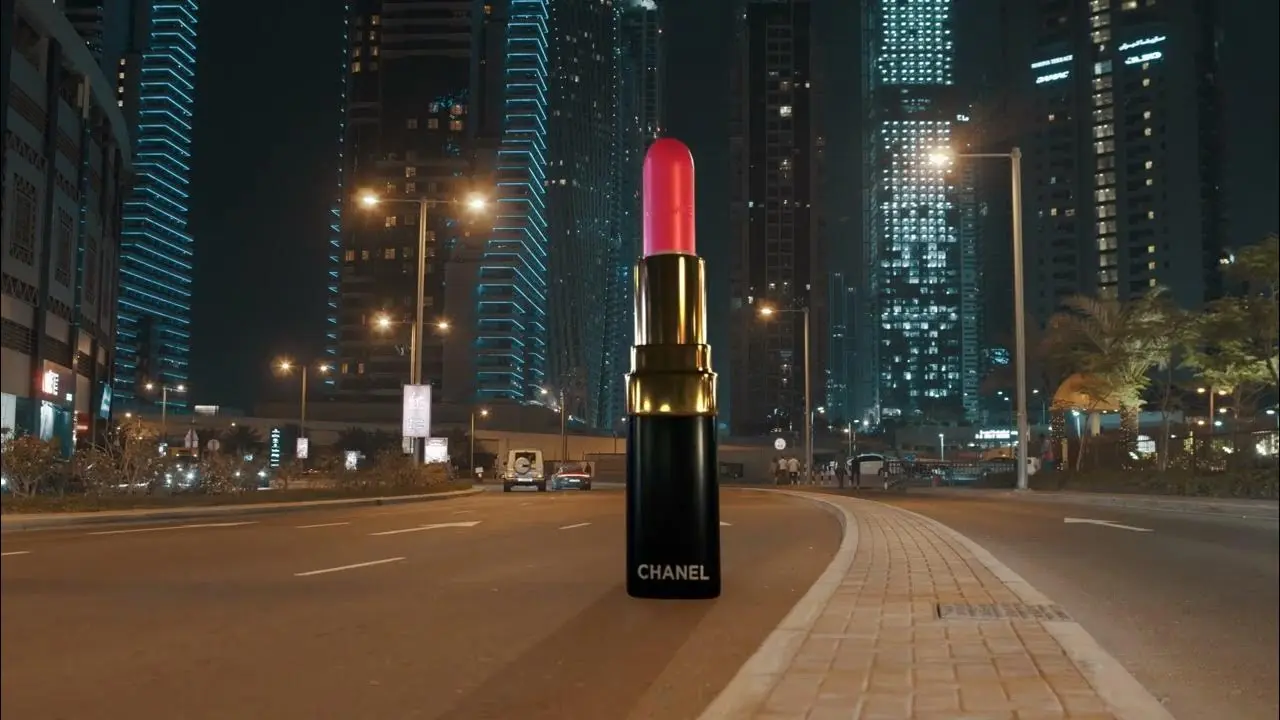
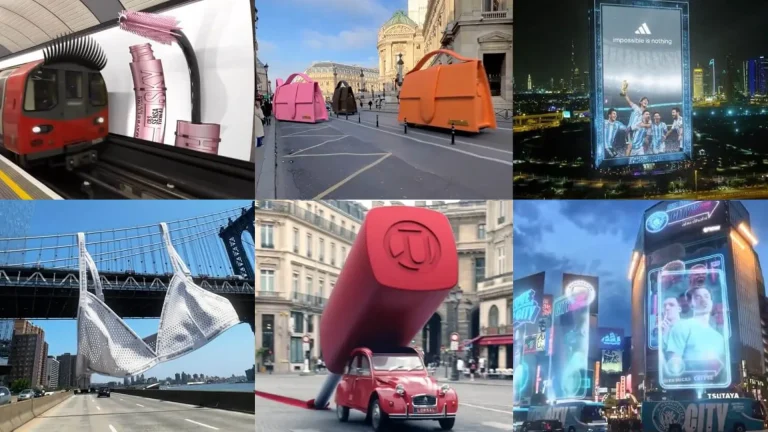
- FOOH social illusions: Large-scale visuals clearly labeled as CGI or visualizations.
- Virtual or digital models: Used carefully to present makeup shades or styling concepts.
- Interactive try-on tools: AR-based formats that complement, but do not replace, CGI beauty ads.
Each format serves a different purpose, but all aim to make the product easier to understand and more appealing at first glance.
CGI Ads Examples for Beauty: Real Campaigns
Looking at real executions is the clearest way to see how this approach works in practice. The examples below come from real beauty campaigns where computer-generated visuals play a key role in product storytelling.
1. Maybelline Lash Sensational Sky High Mascara – CGI Bus & Tube Visual
This beauty cgi video ads example shows how Maybelline used large-scale CGI visuals on London transport to dramatise the effect of their Sky High mascara. The blend of city motion plus CGI lash visuals is eye-catching and highly shareable as a strong example of CGI in beauty advertising that plays with scale and surprise.
- Hook: Giant lashes on moving vehicles instantly capture attention.
- Product truth: Highlights mascara’s lengthening promise as a visual metaphor.
- Share trigger: Unusual CGI integration with real city transport.
Watch: Maybelline CGI Mascara Bus & Tube Short
2. L’Oréal Paris CGI Lipstick Path Visual
This short clip is a clean example of CGI beauty ads adapted for vertical platforms. The CGI elements are used to dramatise colour intensity without showing skin transformation, which keeps the message simple and compliant.
- Hook: Lipstick leaving a vivid lipstick trail in motion.
- Product truth: Communicates strong colour payoff and bold finish.
- Share trigger: Dynamic motion and intense colour contrast.
Watch: L’Oréal Paris CGI Lipstick Ad
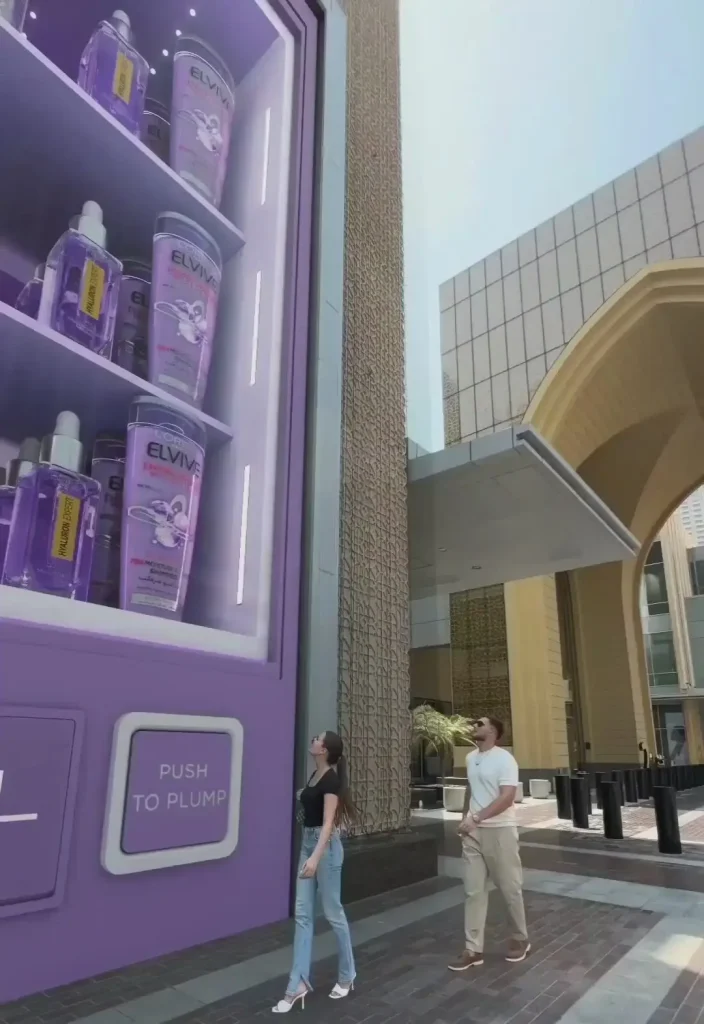
3. L’Oréal Paris 3D CGI Skincare Billboard Campaign
This campaign shows how CGI beauty campaigns are no longer limited to social media. L’Oréal used 3D CGI assets for a large-scale outdoor activation, proving that CGI in beauty and skincare advertising can work just as well on physical screens as it does on mobile.
- Hook: High-impact billboard visuals with 3D rendered products.
- Product truth: Shows product texture and finish under striking motion.
- Share trigger: Immersive presentation and large-scale visual drama.
Watch: L’Oréal Paris Glycolic Bright – 3D Billboard CGI
4. Dior Beauty – Skincare CGI Ingredient Visual (Official Film)
While subtle, this Dior film uses CGI-assisted beauty visuals to create ingredient worlds that would be impossible to film physically. It is a good example of CGI in beauty advertising being used to support brand storytelling rather than overpower it.
- Hook: Floating ingredients and controlled lighting.
- Product truth: Conceptual explanation of formulation, not results.
- Share trigger: Luxury pacing and refined visual language.
Watch: Dior’s skincare film
5. Fenty Beauty x Sephora – CGI FOOH Retail Activation
This execution is not a traditional video ad, but it is a real CGI beauty campaign used for digital-first promotion. Clearly presented as a visual illusion, it shows how CGI campaigns for beauty brands are expanding into experiential and retail-driven formats.
- Hook: Giant Fenty products interacting with a real retail environment.
- Product truth: Focus on iconic packaging and product identity.
- Share trigger: Playful illusion designed to spark social sharing.
View the cgi videos in beauty industry:
What These CGI Beauty Campaigns Have in Common
Across these CGI ads examples for beauty, a few consistent patterns stand out:
- CGI is used to explain or exaggerate an idea, not to fake results
- The focus stays on texture, colour, form, or scale
- Visuals are designed to work in short, loopable formats
- Each cgi beauty campaign communicates one clear message
This is exactly why CGI in beauty advertising continues to grow, especially in visually competitive markets like Dubai and the wider UAE.
Workflow for Creating Beauty Campaigns with CGI
A successful campaign built around computer-generated visuals usually follows a clear, focused structure:
- One promise: Choose a single, verifiable benefit, texture, shine, shade, or packaging feature.
- One visual metaphor: For example, hydration shown as expanding droplets or glow as reflected light.
- One hero loop shot: A 6–10 second visual built for vertical viewing first.
- Platform-first editing: Short pacing, clean cuts, and sound design suited to Reels and TikTok.
- Clear disclosure: If something is a visualization, it is treated as such.
This structure helps brands control costs while still delivering strong visuals.
Timeline of a Beauty Campaign Created with CGI
A well-planned CGI beauty campaign follows a clear production rhythm. While CGI removes many physical limitations, it still requires careful coordination between creative direction, technical execution, and brand approvals. Understanding the timeline helps beauty brands set realistic expectations and avoid rushed decisions that can affect quality.
Below is a typical timeline used in CGI campaigns for beauty brands, particularly for skincare, makeup, and haircare advertising.
1. Concept Definition and Visual Direction (3–5 days)
Every successful cgi beauty campaign starts with a single, focused idea.
At this stage, the brand and agency agree on:
- The core product promise (for example, texture, glow, shine, or shade payoff)
- The visual metaphor used to communicate that promise
- The overall tone (luxury, clinical, playful, minimal)
For CGI in beauty advertising, this phase is crucial because the visuals are created from scratch. Mood boards, reference videos, and rough sketches help align expectations early and prevent unnecessary revisions later.
2. Look Development and Product Modeling (4–7 days)
Once the concept is approved, the CGI team begins building the product digitally.
This includes:
- Accurate 3D product modeling based on real packaging
- Material development to match matte, gloss, shimmer, or satin finishes
- Color calibration to ensure shades look realistic across screens
In beauty cgi video ads, realism is everything. A foundation bottle that looks slightly off or a lipstick shade that feels inaccurate can damage trust, especially in beauty-conscious markets like Dubai.
3. Simulation and Animation Phase (5–14 days)
This is where cgi beauty truly comes to life.
Depending on the campaign, this stage may include:
- Fluid simulations for serums, creams, or oils
- Powder and pigment movement for makeup products
- Hair motion and light reflection for haircare visuals
- Macro animations that highlight texture and density
More complex CGI beauty campaigns require longer simulation times, especially when multiple product behaviors are shown in one video.
4. Compositing, Lighting, and Refinement (4–7 days)
Once animations are ready, everything is polished.
At this stage:
- Lighting is adjusted to enhance product appeal
- Backgrounds and environments are refined
- Visual balance is optimized for mobile screens
For CGI in beauty and skincare advertising, this step ensures the final visuals do not look artificial or overly glossy. The goal is clarity and elegance, not spectacle.
5. Editing and Format Adaptation (2–4 days)
A single CGI Campaigns For Beauty Brands usually produces multiple assets.
Common deliverables include:
- One hero 9:16 vertical video (primary asset)
- 3–6 short cutdowns for paid social
- Square (1:1) and horizontal (16:9) versions
- High-resolution CGI stills and packshots
- Thumbnails and cover frames
Because CGI content is modular, these variations can be produced without reshooting, which is a major advantage of CGI campaigns for beauty brands.
6. Review, Compliance, and Final Delivery (3–5 days)
Before release, final checks are completed:
- Brand consistency review
- Claims and disclosure review
- Platform-specific export settings
Responsible CGI in beauty advertising avoids misleading visuals and clearly separates visual metaphors from real product performance.
Key Production Details in CGI-Driven Beauty Advertising
For CGI in beauty and skincare advertising, details matter more than spectacle:
- Materials must read correctly: matte, satin, gloss, or shimmer.
- Fluids like serums and creams need believable viscosity and flow.
- Hair simulations require natural motion and accurate light reflection.
- Particles such as powder or mist should be subtle, not overwhelming.
- Macro shots need clean edges and texture detail without a plastic look.
Tools like Cinema 4D are often used, but software is only as good as the artistic direction behind it.
Safety, Claims, and Disclosure in CGI-Based Beauty Ads
Responsible CGI beauty advertising respects consumer trust:
- Visual metaphors should never be presented as clinical proof.
- Avoid before-and-after comparisons unless fully substantiated.
- Focus on realistic benefits: texture, shade, shine, packaging.
- Clearly label FOOH or exaggerated visuals as CGI or visualizations.
- Do not suggest impossible skin or hair transformations.
In the end, the clarity of your advertising message is what builds long-term credibility.
Read More: why video marketing is important
Ready to Plan a CGI-Driven Beauty Campaign in Dubai?
If you are thinking about launching a great cgi campaign in beauty that feels premium, clear, and suited to the Dubai market, working with a team that understands both beauty branding and advanced visual production makes all the difference.
Helio works closely with beauty brands across the UAE to create CGI beauty ads that respect authenticity while still capturing attention. From concept development to final delivery, Helio helps brands turn product stories into visuals that feel refined, modern, and made for today’s platforms.
Bringing It All Together
CGI in beauty is not about replacing real products or exaggerating results. It focuses on clarity, control, and creativity. Used thoughtfully, it allows brands to showcase texture, shine, and quality in ways traditional shoots often cannot.
For beauty brands in Dubai and beyond, this approach enables faster production, consistent visuals, and meeting the expectations of a highly visual audience without compromising credibility.