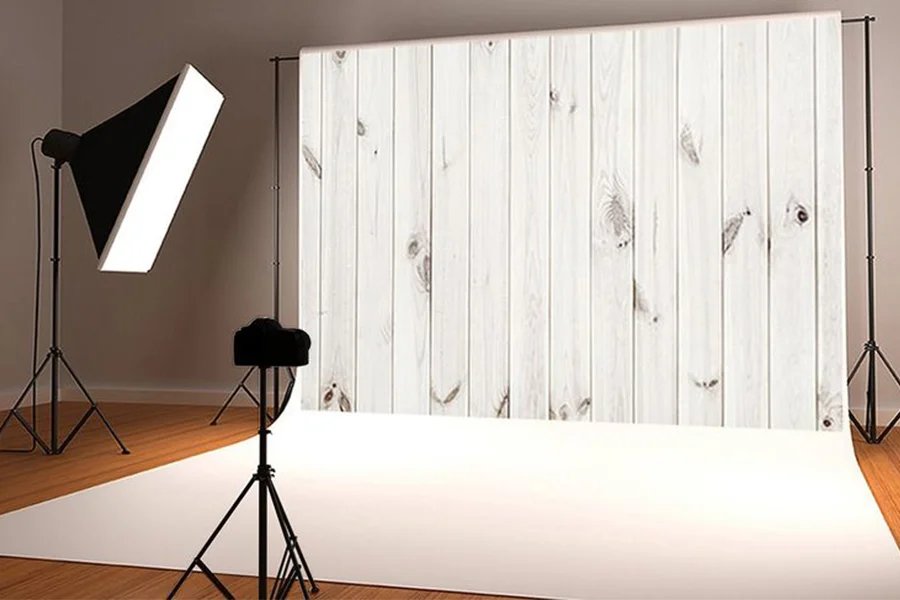
Choosing a backdrop might seem small, but in photography, it shapes everything, from the mood and focus to the ease of editing. The background isn’t just decoration; it’s a tool that isolates your subject, supports your concept, and tells a clearer visual story. When chosen intentionally, it enhances your images; when chosen randomly, it can distract or create problems later.
In this guide, you’ll learn what a photographic backdrop is, explore the main types, and follow a practical, step-by-step approach to select the best backdrop for your shoot, so your images are cleaner, more consistent, and visually effective.
What Is a Photographic Backdrop?
A backdrop is any surface placed behind your subject, paper, fabric, a wall, or a seamless roll. It does more than fill space: it guides focus, sets the mood, and supports the story of your photo. Choosing the best backdrop for photography ensures your subject stands out naturally and your images look polished, consistent, and easier to edit.
What Is the Purpose of a Backdrop?
A backdrop is more than decoration, it’s a tool. When chosen intentionally, it guides the viewer’s attention, supports the concept of your image, and sets the overall mood. A well-selected backdrop keeps the focus on your subject, whether it’s a person, product, or dish, while subtly shaping the emotional tone through color, light, and texture.
Beyond aesthetics, a good backdrop creates separation and depth, helping your subject stand out and preventing the image from feeling flat or cluttered. It also simplifies post-production: clean, intentional backgrounds reduce distractions, speed up editing, and ensure consistent results across portraits, product shots, or content-heavy projects.
In short, the right backdrop removes uncertainty from the frame, reinforces your creative concept, enhances mood, and makes your workflow more efficient.
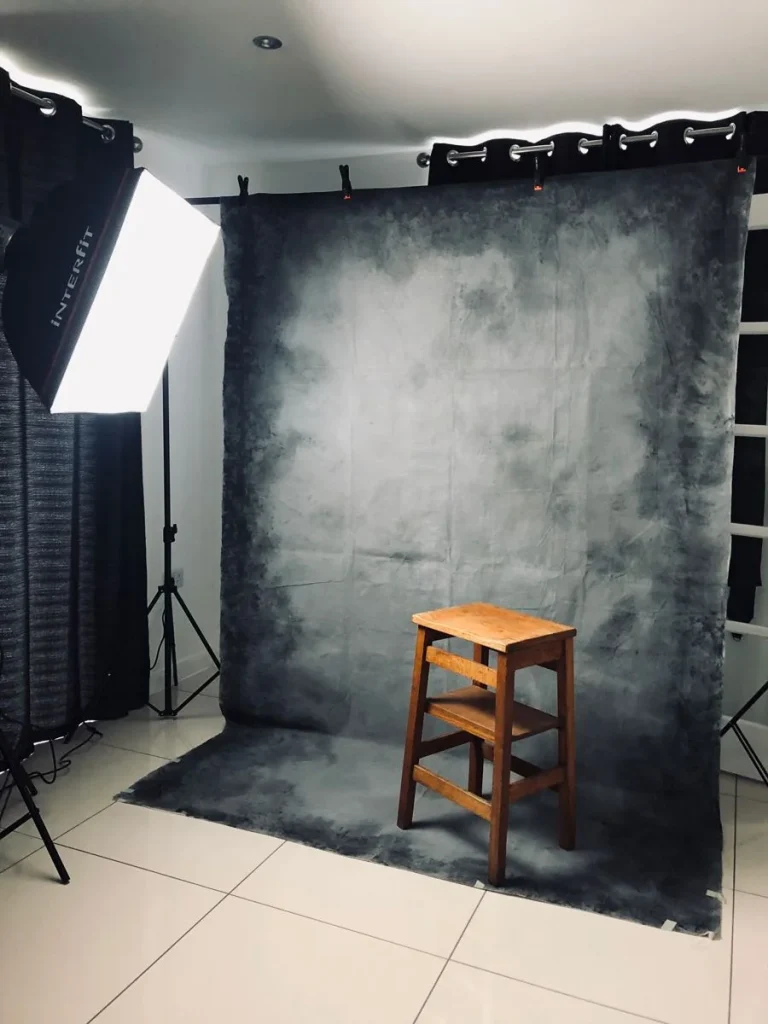
Types of Backdrops for Photography: Pros, Cons, Best Uses
Here’s a practical guide to the main types of photography backdrops, highlighting their key features, advantages, and best-use scenarios.
Paper / Seamless Backdrops
Paper backdrops are smooth, solid-colored rolls that create a clean, distraction-free background, keeping the focus entirely on the subject. They are ideal for product photography, studio portraits, catalogs, and minimalist setups.
Pros:
- Clean and consistent look
- Easy to light
Con:
- Can tear or stain easily
Fabric Backdrops (Muslin & Wrinkle-Resistant)
Soft and flexible, fabric backdrops range from textured muslin to smoother, wrinkle-resistant options. They add natural warmth and a gentle feel, ideal for portraits, lifestyle shoots, and personal branding.
- Pros: Lightweight, easy to store, adds texture and warmth
- Con: Wrinkles can affect the final image
Vinyl Backdrops
Durable and wipeable, vinyl backdrops handle frequent use and are perfect for food photography, kids, or high-volume commercial shoots.
- Pros: Easy to clean, wrinkle- and moisture-resistant
- Con: Heavier and less portable
Canvas Backdrops
Canvas provides thick material with visible texture, giving a fine-art, painterly quality to portraits or editorial work.
- Pros: Premium depth and visual richness, ideal for dramatic lighting
- Con: Bulky and harder to transport
Collapsible / Pop-Up Backdrops
Compact and portable, collapsible backdrops are quick to set up, making them great for on-location portraits, headshots, and small studios.
- Pros: Fast setup, space-saving
- Con: Limited size and design options
Printed / Textured Backdrops
These mimic environments or textures, adding context and storytelling to lifestyle, food, or themed shoots.
- Pros: Adds mood and story, reduces need for props
- Con: Can look artificial if poorly lit
Green Screen Backdrops
Green screens allow complete background replacement in post-production, offering full creative flexibility for video, composites, or commercial campaigns.
- Pros: One backdrop, endless possibilities
- Con: Requires precise lighting and post-editing
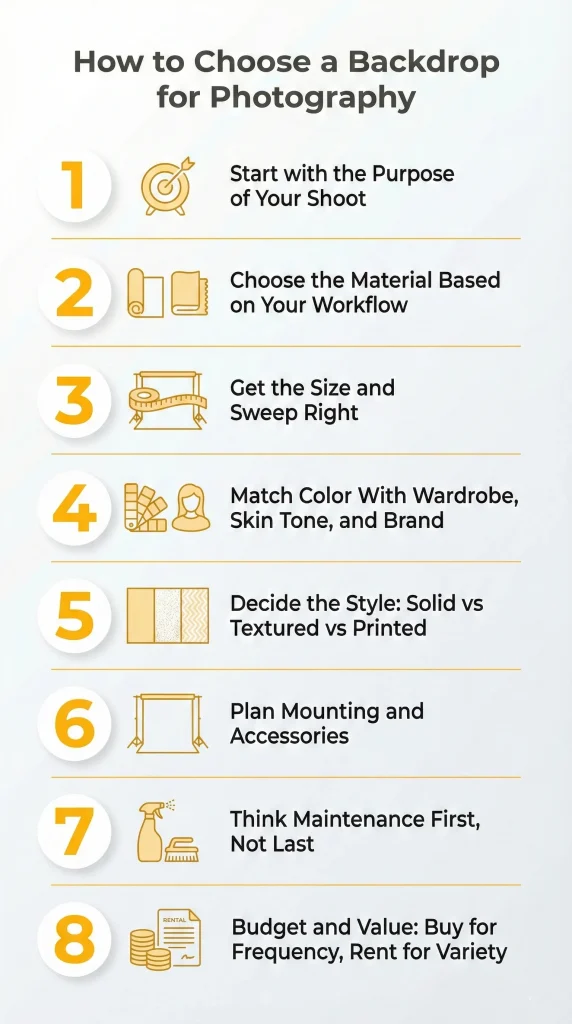
How to Choose a Backdrop for Photography
If you want a repeatable way to choose a photography backdrop (instead of guessing every time), use this decision flow. It works for portraits, products, food, and content shoots, and it helps you consistently land on the best backdrop for photography based on the job, not personal preference.
1) Start with the Purpose of Your Shoot
Why it matters: The purpose decides everything, the mood, the level of cleanliness, and how much the background should “speak.” If you skip this step, you’ll end up with a backdrop that looks nice but works against the photo. The impact is that you avoid mismatched vibes (e.g., a busy printed background for a product that needs focus).
- If the goal is selling/clarity (catalog, e-commerce), choose simple, clean backdrops.
- If the goal is emotion/story (lifestyle, editorial), choose texture or scene cues.
- If the goal is speed + volume, choose durable, low-maintenance options.
2) Choose the Material Based on Your Workflow
Why it matters: Material affects wrinkles, reflections, cleanup time, portability, and how consistent your results look. The impact is that the “best” backdrop isn’t the prettiest; it’s the one that saves you time and produces reliable results.
- If you need clean and minimal: paper/seamless
- If you want soft, organic feel: fabric (muslin/wrinkle-resistant)
- If spills happen (food, kids): vinyl
- If you want fine-art depth: canvas
- If you travel a lot: collapsible/pop-up
- If you’ll replace backgrounds later: green screen
3) Get the Size and Sweep Right
Why it matters: Wrong size forces awkward cropping, limits poses, and creates shadows or visible edges. Sweep determines whether your background looks seamless or “like a wall.” The impact is that Proper sizing prevents “background problems” that no filter fixes wrinkles, corners, and cramped composition.
- If you shoot full body: go wider + longer, with a proper sweep.
- If you shoot products/tabletop: smaller backdrops are enough, but keep extra space for framing.
- If you shoot groups: prioritize width so people aren’t squeezed into the center.
4) Match Color With Wardrobe, Skin Tone, and Brand
Why it matters: Color changes the subject’s look, the mood, and even perceived quality. It also controls how much editing you’ll need. The impact is The right color makes the subject pop naturally; the wrong one creates dull skin tones, clashing outfits, and extra retouching.
- If clothing is bold/patterned: choose a quiet, solid backdrop
- If the subject is neutral/monochrome, you can add subtle texture or richer color
- If you’re shooting for a brand, stay within the brand palette or complementary tones
- If you want a timeless look, neutrals (off-white, gray, muted tones) are safer than trendy colors
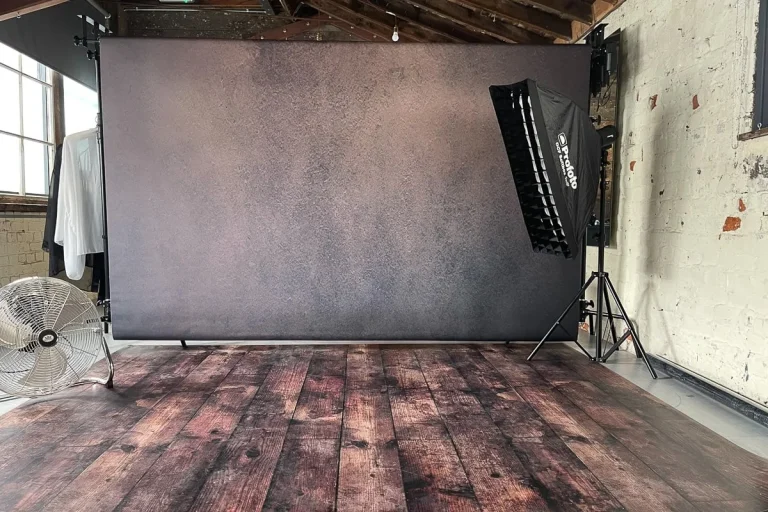
5) Decide the Style: Solid vs Textured vs Printed
Why it matters: Style controls how “loud” the background feels. The more complex it is, the more it can steal attention. The impact is this step prevents your backdrop from becoming the main character when your subject should be.
- If you want maximum focus: solid
- If you want depth without distraction: subtle texture
- If you want story/context fast: printed, but keep it believable and not too busy
6) Plan Mounting and Accessories
Why it matters: Even a perfect backdrop fails if it’s hard to set up, slips, wrinkles, or takes forever to adjust. Set up friction kills consistency, especially when you’re shooting regularly. The impact is better mounting means fewer “fix it later” problems and faster shoot flow.
- If you shoot often, choose a setup that’s fast to repeat
- If you shoot in small spaces, choose collapsible or smaller systems
- If your backdrop needs to stay smooth, prioritize tools that keep it tight and stable
7) Think Maintenance First, Not Last
Why it matters: Maintenance affects cost over time and how confidently you can use the backdrop without “babying” it. The impact is that Maintenance determines whether your backdrop stays usable after the first few sessions.
- If the shoot gets messy, choose wipeable materials
- If you hate dealing with wrinkles, avoid wrinkle-prone fabrics
- If you need a pristine look every time, choose options you can replace or refresh easily
8) Budget and Value: Buy for Frequency, Rent for Variety
Why it matters: The cheapest option becomes expensive if it slows you down or needs frequent replacement. The smartest spend depends on how often you shoot and how consistent your style is.
- If you shoot the same style weekly, invest in reliable, repeatable backdrops
- If you shoot many concepts rarely, prioritize versatility (neutral + textured options)
- If you’re building a kit from zero, start with one solid neutral and one texture before adding printed looks
Quick Troubleshooting
Fast fixes for the most common backdrop problems, no overthinking required:
- Backdrop feels too small: Raise it higher or switch to a wider size to avoid tight framing and visible edges.
- Wrinkles show on fabric: Steam the backdrop before shooting; wrinkles appear stronger on camera than in real life.
- Vinyl keeps creasing: Store vinyl rolled, not folded, to maintain a smooth surface.
- Paper backdrop is damaged: Tear off the stained or creased section and roll down a fresh layer.
- Backdrop looks dirty: Wash fabric backdrops or wipe vinyl surfaces immediately after use.
- Light leaks or backdrop looks thin: Double-layer the backdrop or place a neutral backing behind it.
- Color doesn’t feel right: Adjust tone or saturation slightly in post-production before reshooting.
- Harsh background shadows: Increase the distance between the subject and the backdrop.

Thoughtful Creativity, Made Clear
Helio Agency works as a creative partner, helping ideas take shape through clear and intentional visual direction. The agency combines strategic thinking with practical execution across branding, content, and design, supporting businesses in communicating more effectively through visuals that feel considered and consistent.
Rather than chasing trends, Helio focuses on clarity, cohesion, and problem-solving, making sure each creative choice serves a defined purpose. From early concepts to visual direction, projects are approached with attention to detail and an understanding of how visual decisions affect perception.
Closing Insight
The right backdrop doesn’t distract, compete, or complicate; it quietly does its job. When you choose a backdrop with purpose, material, size, color, and maintenance in mind, you stop fixing problems in post and start creating cleaner, stronger images from the start.
Mastering how to choose a backdrop for photography isn’t about having more options; it’s about making better, more intentional decisions every time you shoot.