Black Friday is one of the most competitive periods for digital advertising. Brands compete for attention with limited-time offers, special discounts, product bundles, and promotional campaigns. During this period, even a good offer can get lost among hundreds of similar advertisements.
Video advertising gives businesses an opportunity to communicate their offers quickly, demonstrate product value, and create a stronger connection with potential customers.
However, producing a visually attractive video is not enough. A high-converting Black Friday video ad needs a clear message, an attention-grabbing opening, a compelling offer, and a direct path to purchase.
The challenge is to combine creative production with advertising strategy. Every visual, sound, and message should contribute to one objective: encouraging the viewer to take action.
Why Video Ads Matter During Black Friday
During Black Friday, consumers are exposed to a large volume of promotional messages across social media, websites, and digital advertising platforms.
Static advertisements can communicate a discount effectively, but video offers more opportunities to demonstrate products, explain offers, show comparisons, and create urgency.
A well-produced video can help businesses:
Capture attention in crowded social feeds.
Demonstrate product features and benefits.
Communicate promotional offers quickly.
Show products in real-life situations.
Introduce bundles and limited-time deals.
Build trust through customer experiences.
Encourage viewers to visit a landing page or complete a purchase.
Video also allows brands to create multiple versions of the same campaign, making it easier to test different messages, openings, and creative approaches.
The important point is that video should do more than announce a discount. It should give customers a reason to consider the offer.
1. Start With a Clear Campaign Objective
Before developing the creative concept, define what the video needs to achieve.
Not every Black Friday campaign has the same objective. Some businesses want to increase product sales, while others focus on generating leads, promoting bundles, clearing seasonal inventory, or attracting new customers.
The objective determines the video's structure, messaging, and call to action.
Match the Video to the Campaign Goal
Consider these common objectives:
Campaign objectiveRecommended video approachIncrease product salesProduct-focused videos with clear pricing and offersPromote product bundlesVideos showing the included products and combined valueGenerate leadsVideos highlighting benefits and encouraging inquiriesIncrease brand awarenessCreative storytelling and recognizable brand visualsPromote limited-time offersCountdown elements and clear deadline messagingAttract new customersProduct demonstrations, testimonials, and introductory offers
A video designed to sell a specific product should not spend most of its duration introducing the company. Likewise, an awareness campaign may need more storytelling than a direct-response advertisement.
Define one primary objective for each video before production begins.
2. Capture Attention in the First Three Seconds
The opening of a Black Friday video is critical. Viewers scrolling through social media can quickly move past content that does not immediately communicate something relevant or interesting.
Instead of beginning with a long logo animation or general brand introduction, use the opening seconds to create curiosity, introduce the offer, or show the product.
Effective Video Hooks for Black Friday
Lead With the Offer
Start with the main promotion.
For example:
Black Friday: Up to 50% Off.
Your Favorite Products, Now at Special Prices.
Limited-Time Offers Start Now.
This approach works particularly well for audiences who are actively looking for deals.
Show the Product Immediately
If the product is visually appealing, make it the focus of the opening shot. Show its most recognizable feature, demonstrate how it works, or present it in an interesting setting.
Create a Visual Surprise
Use an unexpected transition, rapid product reveal, unusual camera movement, or creative visual effect to interrupt the scrolling experience.
For example, a product could appear through a fast sequence of packaging shots, a dramatic lighting change, or a series of quick transformations.
Introduce a Customer Problem
Start with a situation that your target audience recognizes.
For example, a video advertising a home appliance could begin with a common household frustration before revealing the product and its Black Friday offer.
The hook should be relevant to the product and audience. An attention-grabbing opening that has no connection to the actual offer may generate views without generating sales.
3. Make the Offer Easy to Understand
The discount is often the main reason customers pay attention to Black Friday advertisements. If viewers cannot understand the offer quickly, they may lose interest.
Avoid presenting too many details at once. Prioritize the information that helps customers make a purchase decision.
What Should the Video Communicate?
Depending on the campaign, the essential information may include:
The product or service.
The discount or promotional price.
The main benefit of the offer.
The promotion's starting and ending dates.
Any relevant conditions.
Where customers can purchase.
For example, instead of showing several promotional messages in one frame, use a simple sequence:
Introduce the product.
Reveal the Black Friday discount.
Highlight the main product benefit.
Show the purchase destination and CTA.
Show the Value, Not Just the Discount
A discount alone does not explain why a product is worth purchasing.
Consider a campaign offering a bundle of three products. Rather than simply displaying the percentage discount, show the products together, explain what customers receive, and communicate the value of the bundle.
This makes the offer more tangible and helps viewers understand what they are paying for.
4. Choose the Right Creative Format
Different video formats serve different campaign objectives. The best approach depends on the product, audience, platform, and type of promotion.
Product Showcase Videos
Product showcase videos focus on presenting the product through detailed shots, attractive compositions, and visual demonstrations.
They are useful for electronics, fashion, beauty products, home appliances, and other visually driven categories.
A typical structure includes:
An opening product reveal.
Close-up shots of important details.
A demonstration of key features.
A promotional offer.
A direct call to action.
Bundle and Collection Videos
If the campaign includes bundles or multiple discounted products, use a format that presents the collection clearly.
Products can appear individually through quick transitions before coming together in a final composition.
This approach helps customers understand the range of available offers without requiring a separate video for every item.
Lifestyle and Demonstration Videos
Lifestyle videos show products being used in real situations.
They help communicate practical benefits and give viewers a better understanding of how a product fits into their daily lives.
This format can be particularly effective for home appliances, fashion, beauty, fitness, and lifestyle products.
UGC-Style Video Ads
User-generated content and creator-style videos use a more personal and conversational approach.
A creator might demonstrate a product, explain why they recommend it, or share a genuine customer experience.
These videos can make promotional content feel more relatable, especially when the presentation matches the expectations of the target audience.
However, authenticity should not be confused with poor production quality. Clear audio, accurate product information, and effective editing still matter.
Motion Graphics and Animated Offers
Motion graphics can make promotional information easier to understand and visually engaging.
Animated prices, discount percentages, product names, countdowns, and transitions can help brands present multiple offers in a short video.
This format is useful when the campaign involves several products, changing prices, or promotional conditions that need to be communicated clearly.
5. Design the Video for Mobile Viewing
Most social media advertising is consumed on mobile devices. A video should therefore be designed for smaller screens rather than simply adapted from a horizontal commercial.
Choose the Appropriate Aspect Ratio
Different placements require different formats.
FormatAspect ratioCommon useVertical9:16Instagram Reels, TikTok, YouTube ShortsSquare1:1Social media feedsLandscape16:9YouTube and website video placements
If the campaign runs across several platforms, plan the framing before filming.
Important product details, promotional text, and logos should remain visible when the footage is adapted to different aspect ratios.
Keep On-Screen Text Readable
Promotional information should be easy to read on a smartphone.
Use large typography, strong contrast, and short phrases. Avoid placing essential information near interface elements or areas that may be covered by platform controls.
A viewer should be able to understand the main offer without pausing the video.
Design for Sound-Off Viewing
Many users watch social content without sound. Your video should still communicate its main message through visuals and on-screen text.
Music, sound effects, and voice-over can strengthen the experience, but they should not be the only way viewers understand the offer.
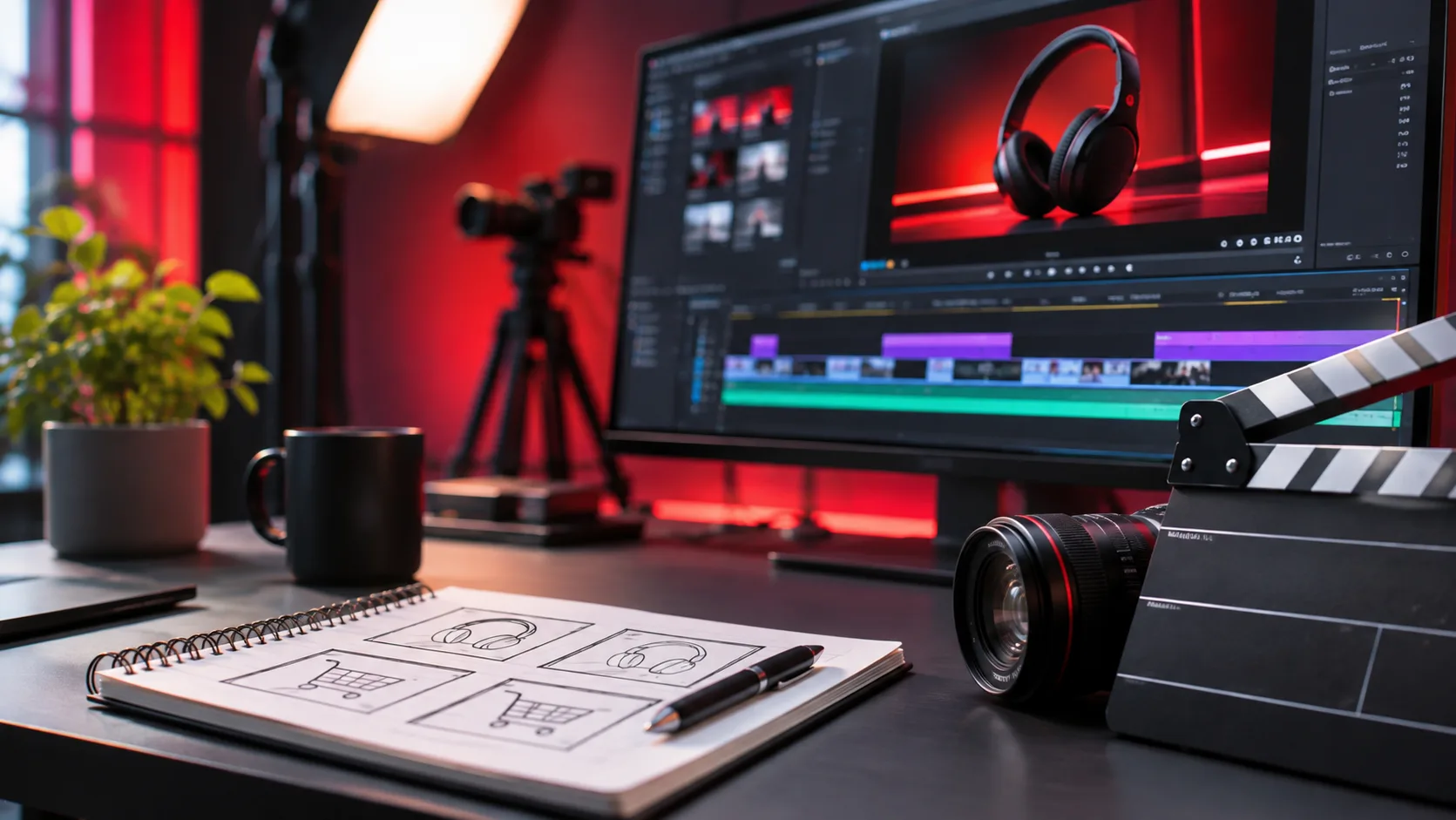
6. Use Editing to Maintain Attention
Editing has a direct impact on how effectively a video communicates its message.
A slow introduction, unnecessary transitions, or repetitive product shots can reduce engagement. At the same time, editing that is too fast can make promotional information difficult to understand.
The objective is to create a rhythm that supports the message.
Use Transitions With a Purpose
Transitions should connect scenes, reveal products, or emphasize important moments.
Examples include:
Match cuts between different product colors.
Quick cuts to introduce several offers.
Whip transitions for energetic campaign videos.
Speed ramps to emphasize product movement.
Animated transitions to reveal discounts.
Split-screen layouts to compare products or prices.
Avoid adding effects simply because they look impressive. Every transition should contribute to the visual flow.
Use Sound Design to Support the Message
Music and sound effects can reinforce the campaign's energy and make product reveals more impactful.
Consider using:
Music that matches the brand's personality.
Short sound effects for discount reveals.
Rhythmic cuts that align with the soundtrack.
Voice-over when additional explanation is needed.
Subtitles for spoken information.
Music licensing should also be considered, especially when the video will be used for paid advertising.
7. Create a Strong Call to Action
A video can attract attention and communicate an attractive offer, but it still needs to tell viewers what to do next.
The call to action should be specific and directly connected to the campaign objective.
Examples include:
Shop the Black Friday Collection.
Explore the Offers.
Get Your Discount Today.
Shop Before the Sale Ends.
Discover the Bundle Deals.
Visit Our Website to Order.
Avoid using several competing CTAs in a short advertisement. Choose one primary action and make it visually clear.
Match the CTA to the Landing Page
The customer experience should remain consistent after someone clicks the advertisement.
If the video promotes a specific product bundle, the landing page should take customers directly to that bundle rather than a general homepage.
The product, price, discount, and promotional conditions should match the advertisement.
A disconnect between the video and landing page can create confusion and reduce conversion rates.
8. Create Multiple Versions of the Same Video
One creative concept can generate several advertising variations.
Rather than relying on a single video throughout the entire campaign, develop alternative versions that test different hooks, offers, product shots, and messages.
For example, a Black Friday campaign could include:
VersionMain focusVersion ADiscount-led openingVersion BProduct demonstrationVersion CBundle presentationVersion DCustomer testimonialVersion ELimited-time offer
Each version should have a clear purpose.
You can also create shorter edits from the main video for different placements. A 30-second commercial, for example, may produce several 10- or 15-second variations.
This approach gives advertising teams more creative options without requiring an entirely new production for every advertisement.
9. Test and Optimize Video Ad Performance
A successful Black Friday campaign should not depend entirely on creative assumptions. Advertising performance needs to be monitored throughout the campaign.
Testing helps identify which creative elements attract attention and which ones encourage customers to take action.
Key Metrics to Monitor
MetricWhat It MeasuresHook RateHow effectively the opening captures attentionVideo ViewsThe number of views based on the platform's definitionVideo Completion RateHow many viewers watch the video to the endClick-Through Rate (CTR)The percentage of impressions that generate clicksCost Per Click (CPC)The average cost of each clickConversion RateThe percentage of visitors who complete the desired actionCost Per Acquisition (CPA)The cost of acquiring a customer or conversionReturn on Ad Spend (ROAS)Revenue generated relative to advertising spend
Do not evaluate a video using views alone. A video with high engagement may still generate few purchases if the offer, audience, or landing page is not effective.
What Should You Test?
Start with a few meaningful creative variables:
Different opening hooks.
Discount-led versus product-led messaging.
Different product demonstrations.
Short versus longer video edits.
Different calls to action.
Creator-style versus studio-produced content.
Test variations systematically and use the results to guide further optimization.
10. Plan the Campaign Around Different Buying Stages
Black Friday video advertising should not necessarily communicate the same message to every audience.
Someone discovering a brand for the first time has different needs from someone who has already visited the product page or added an item to their cart.
A campaign can be structured around three main stages.
Before Black Friday: Build Awareness and Interest
Before the promotion begins, videos can introduce products, build anticipation, and communicate that a special offer is approaching.
Useful formats include teaser videos, product previews, countdown content, and campaign announcements.
The objective is to create awareness and encourage potential customers to pay attention when the offer becomes available.
During Black Friday: Drive Conversions
During the sale, communication should become more direct.
Focus on the available products, discount details, bundle value, and purchase instructions.
Retargeting audiences who have previously interacted with the brand can also help bring interested customers back to the offer.
After Black Friday: Continue Customer Engagement
The campaign does not necessarily end when the discount period finishes.
Businesses can use follow-up content to communicate delivery information, introduce related products, encourage customer feedback, and build relationships with newly acquired customers.
This helps turn seasonal purchases into longer-term customer relationships.
Common Mistakes in Black Friday Video Advertising
Focusing Only on the Discount
A large discount may attract attention, but it does not explain the product's value. Show what customers receive and why the offer is relevant.
Using a Long Brand Introduction
During a competitive sales period, viewers need to understand the subject quickly. Avoid lengthy introductions that delay the main message.
Showing Too Many Products at Once
Trying to promote every available item in one short video can make the advertisement confusing. Prioritize a few products or organize the campaign into separate creative assets.
Ignoring Mobile Optimization
Small text, poorly positioned products, and horizontal footage adapted without proper framing can weaken the viewing experience on mobile devices.
Creating Only One Video Version
Different audiences respond to different messages. Relying on one creative approach limits the opportunity to learn and optimize.
Forgetting the Landing Page Experience
Even a strong advertisement can fail if the landing page is confusing, slow, or inconsistent with the offer shown in the video.
Using Urgency Without Accuracy
Countdowns and limited-time messaging can encourage action, but promotional deadlines and stock claims must be accurate. Misleading urgency can damage customer trust.
Black Friday Video Ad Production Checklist
Before launching your campaign, make sure the following elements are ready:
The primary campaign objective is defined.
The target audience and main offer are clear.
The opening hook communicates something relevant.
The product and its main benefits are visible.
Discount details and promotional conditions are accurate.
The video is optimized for mobile viewing.
On-screen text is readable without sound.
The CTA is clear and specific.
Different creative versions are prepared.
Landing pages match the advertisement.
Tracking and conversion measurement are configured.
Music and visual assets have appropriate usage rights.
Final Thoughts
High-converting Black Friday video ads require more than attractive visuals and large discount percentages. They combine a clear offer, effective creative direction, mobile-first production, and a well-planned customer journey.
From the first few seconds to the final call to action, every element should help viewers understand the offer and take the next step.
For businesses, the strongest approach is to plan creative assets around campaign objectives, develop multiple variations, and use performance data to improve the results.
At Helio, creative strategy, video production, and digital marketing come together to help businesses develop advertising content that communicates clearly and supports measurable campaign goals.
Planning a Black Friday campaign? Explore Helio's creative and video production services at helio.ae and discover how professional content can support your next advertising campaign.
Frequently Asked Questions
What makes a Black Friday video ad successful?
A successful Black Friday video ad combines an attention-grabbing opening, a clear promotional offer, compelling product visuals, mobile-friendly editing, and a direct call to action. Its effectiveness should ultimately be measured through relevant campaign results, such as conversions and return on ad spend.
How long should a Black Friday video ad be?
The ideal length depends on the platform, audience, and campaign objective. Short videos of around 10–15 seconds can communicate simple offers, while longer formats may be useful for product demonstrations and detailed explanations. The message should determine the duration.
Which video format works best for Black Friday advertising?
Vertical video is commonly used for short-form placements such as Instagram Reels, TikTok, and YouTube Shorts. Square and landscape formats can be appropriate for other placements. The best format depends on where the target audience will see the advertisement.
Should brands use influencers for Black Friday video ads?
Influencers and content creators can help brands introduce products to relevant audiences through demonstrations, reviews, and promotional content. The right creator should match the target audience, brand identity, and campaign objectives.
How many video variations should a Black Friday campaign have?
There is no fixed number. A practical starting point is to develop several variations with different hooks, product presentations, and messages. The campaign team can then use performance data to identify which versions deserve further investment.
When should businesses start producing Black Friday video ads?
Production should begin well before the campaign launch. Businesses need time for creative development, scripting, filming, editing, approvals, and preparing different advertising formats. Starting early also allows time to test creative variations before the main promotional period.
How can businesses measure the ROI of Black Friday video ads?
Businesses can compare the revenue attributed to the campaign with its advertising spend and production costs. Metrics such as ROAS, CPA, conversion rate, and customer acquisition cost help evaluate performance. Tracking should be configured before the campaign launches.