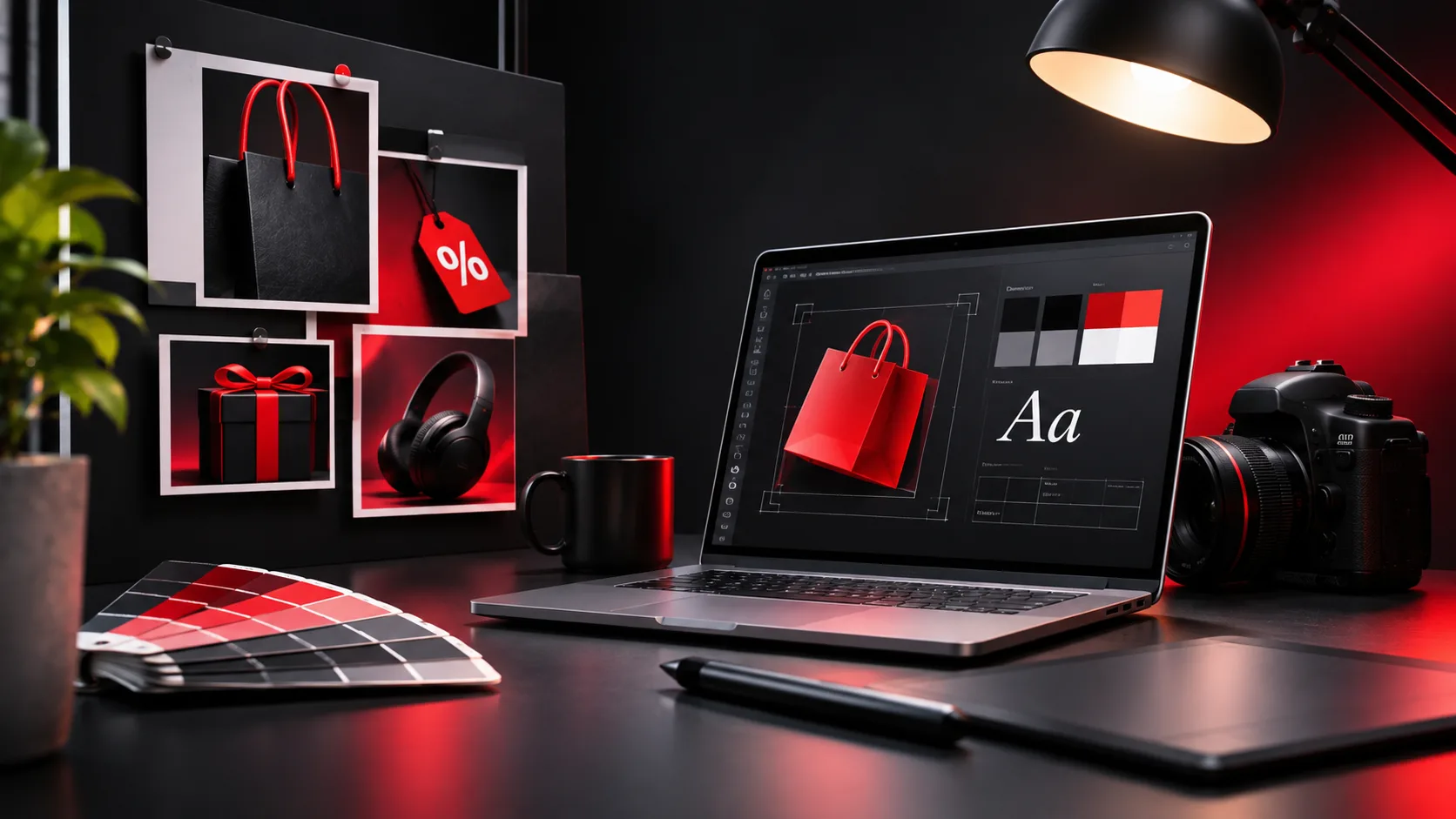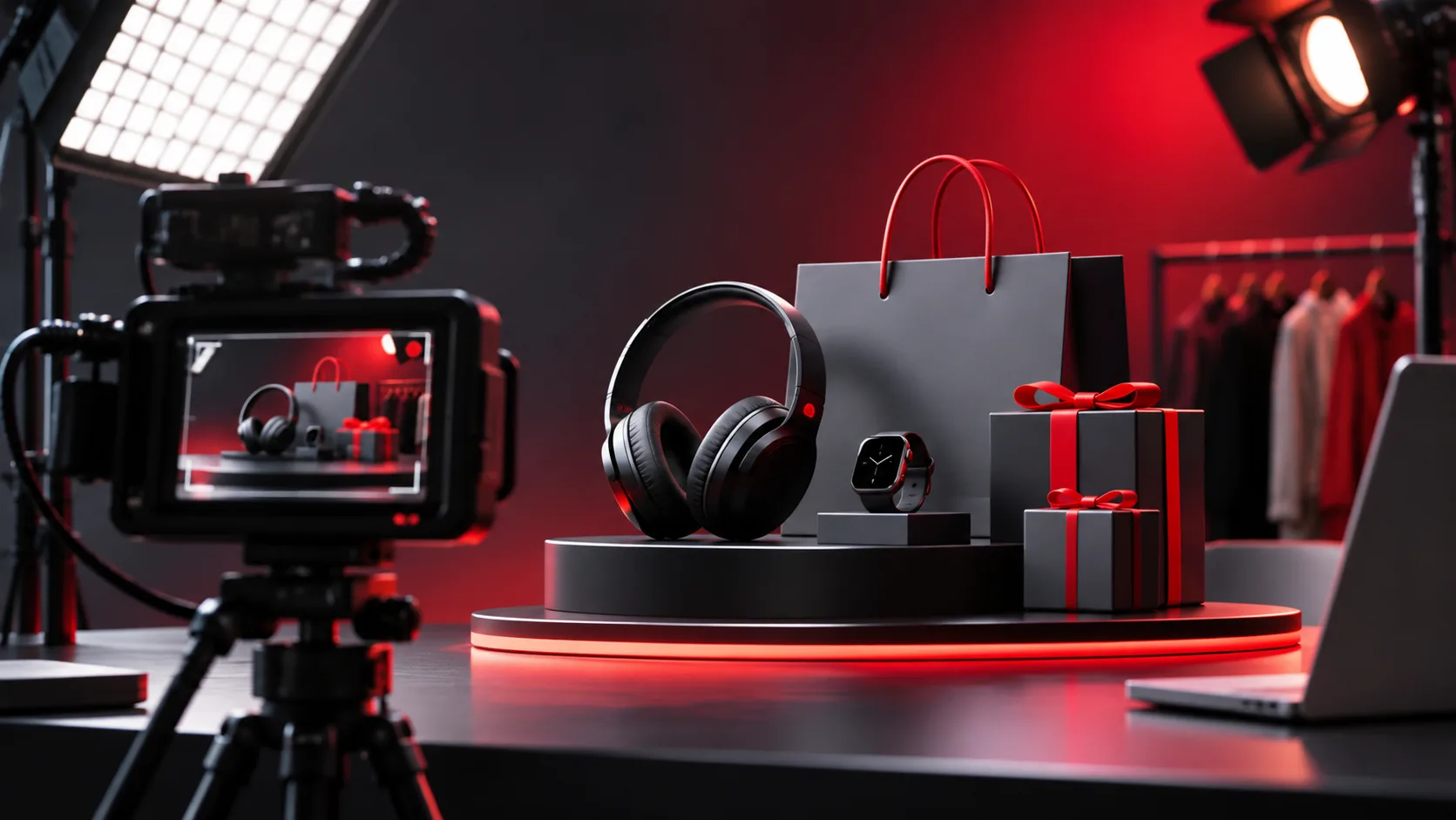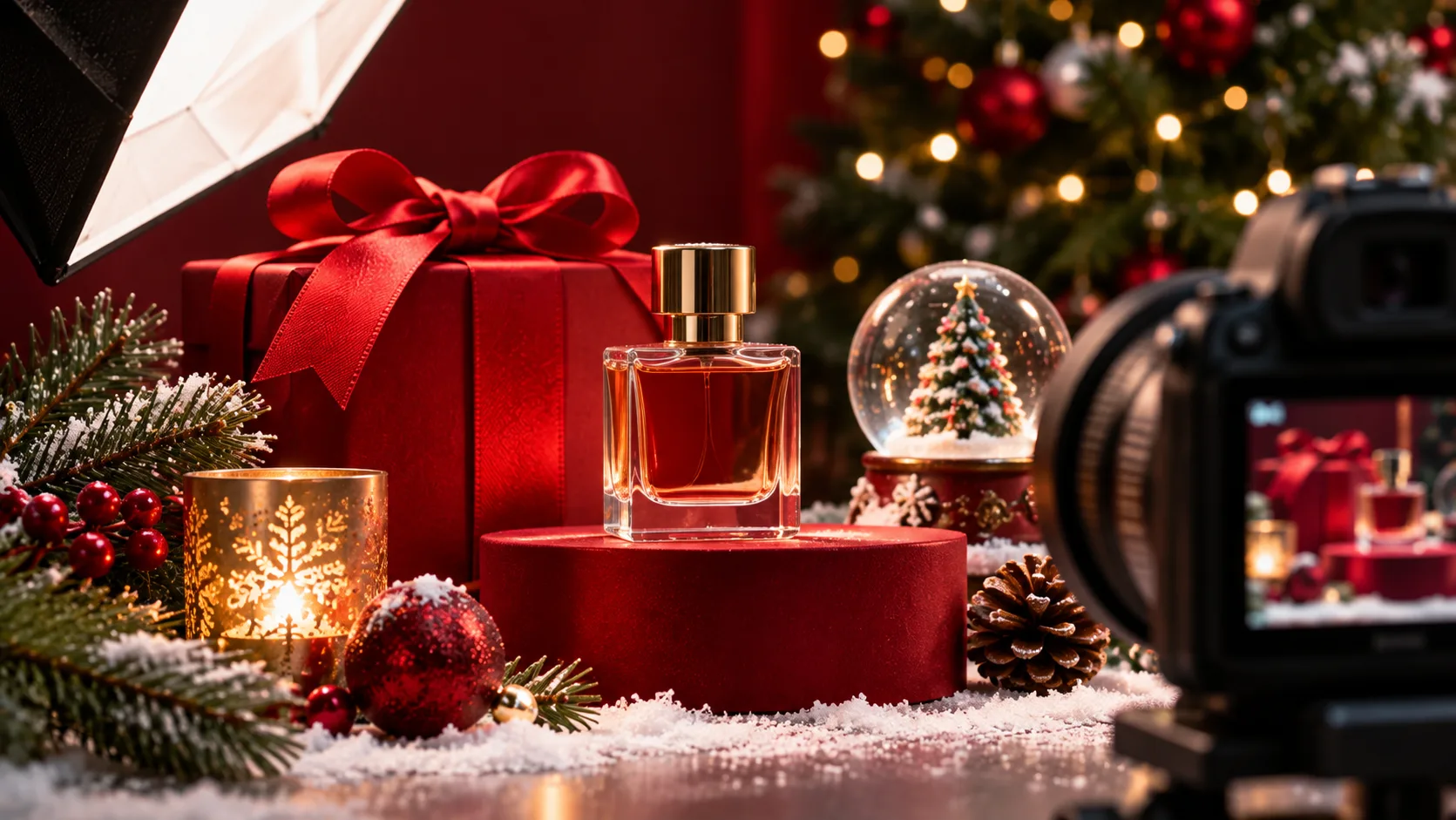
Christmas is an important seasonal opportunity for brands to refresh their visual content, promote gift collections, and connect with customers through festive campaigns.
During this period, product images often need to do more than present an item clearly. They should communicate the atmosphere of the season, create an emotional connection, and help customers imagine the product as part of a Christmas celebration.
From gift boxes and beauty products to food, fashion, and home accessories, professional Christmas product photography can help brands create distinctive seasonal visuals for websites, social media, digital advertisements, and promotional campaigns.
However, creating effective festive product images requires more than placing a Christmas tree or a few decorations in the background. Lighting, composition, color, product positioning, and styling all need to work together.
This guide explores how to plan and execute Christmas product photography that looks professional while keeping the product at the center of attention.
Why Christmas Product Photography Matters
Seasonal photography gives brands an opportunity to present their products in a context that feels relevant to customers during the holiday period.
A product photographed against a standard background may communicate its features, but a carefully designed Christmas scene can also suggest gifting, celebration, comfort, and seasonal experiences.
Professional Christmas product photography can help businesses:
Promote seasonal collections and limited-edition products.
Present gift sets and holiday bundles more effectively.
Create consistent visuals for Christmas campaigns.
Improve the appearance of product pages and online stores.
Develop engaging content for social media.
Support digital advertising and promotional materials.
Strengthen the seasonal identity of a brand.
For e-commerce businesses, high-quality product images are particularly important because customers cannot physically examine products before purchasing. Clear photography combined with thoughtful seasonal styling can make the online shopping experience more engaging.
1. Define the Creative Direction Before the Shoot
Before selecting props or arranging the products, establish the visual direction of the photoshoot.
Christmas can be represented through many different styles. A luxury brand may prefer a refined and minimal atmosphere, while a family-oriented business may choose a warm and playful setting.
The creative direction should reflect the brand's identity, target audience, and campaign objectives.
Popular Christmas Photography Styles
Classic Christmas
This style uses familiar seasonal elements such as red and green decorations, Christmas trees, ornaments, ribbons, and gift boxes.
It works well for gift collections, food products, home accessories, and family-oriented brands.
Minimal and Modern
A minimal approach uses simple backgrounds, limited decorations, clean compositions, and controlled lighting.
It is suitable for brands that want to maintain a contemporary appearance without overwhelming the product with seasonal details.
Luxury Christmas
Luxury product photography often combines elegant materials, refined color palettes, dramatic lighting, and carefully selected props.
Gold, deep green, burgundy, black, and metallic finishes can help establish a premium atmosphere.
Warm and Cozy
This style focuses on comfort and familiar holiday experiences. Soft lighting, warm colors, textured fabrics, candles, wooden surfaces, and natural decorations can create an inviting scene.
It is particularly useful for lifestyle products, home accessories, food, and gift collections.
Playful and Colorful
Brands targeting younger audiences or promoting fun seasonal products may use bright colors, unusual compositions, creative props, and energetic styling.
This direction can also work well for social media campaigns that need distinctive visuals.
2. Choose the Right Background
The background plays an important role in Christmas product photography. It establishes the atmosphere of the scene and determines how the product interacts with its surroundings.
A suitable background should complement the product without competing for attention.
Consider Different Background Materials
Seamless Paper Backgrounds
Paper backgrounds provide a clean and controlled surface. They are useful for product photography that needs a simple, polished appearance.
White, cream, red, green, and darker seasonal tones can all work depending on the creative direction.
Fabric Backgrounds
Velvet, linen, cotton, and textured fabrics can add depth and a sense of warmth.
For example, a velvet surface may suit luxury gift photography, while natural linen can support a more relaxed and understated Christmas aesthetic.
Wooden Surfaces
Wood can create a warm, natural atmosphere. It works particularly well for food photography, handmade products, candles, and rustic gift arrangements.
Decorative Backgrounds
Wallpaper, textured panels, painted surfaces, and custom-built sets can help create a more distinctive campaign environment.
When choosing a background, consider the product's color and shape. A dark product may disappear against a dark surface, while a highly detailed background can distract from products with complex packaging.
3. Use Christmas Props Without Overcrowding the Scene
Seasonal props help establish the Christmas atmosphere, but they should support the product rather than become the main subject.
A carefully selected group of decorations is often more effective than filling the entire frame with festive objects.
Useful Props for Christmas Product Photography
Some commonly used props include:
Christmas ornaments and baubles.
Pine branches and artificial greenery.
Gift boxes and ribbons.
Christmas lights.
Decorative stars and bells.
Candles and lanterns.
Seasonal fabrics.
Wooden decorations.
Snow-like materials and artificial snow.
Festive tableware.
Match Props to the Product
The props should make sense in relation to the item being photographed.
For example:
Skincare products can be styled with elegant ornaments, soft fabrics, and subtle metallic details.
Food products can be photographed with seasonal ingredients, festive tableware, and natural decorations.
Electronics may benefit from a modern gift presentation with clean surfaces and controlled lighting.
Fashion accessories can be styled with gift packaging, textured materials, and complementary seasonal colors.
Avoid placing decorations too close to important product details. Labels, packaging information, and recognizable product features should remain visible.
4. Plan a Christmas Color Palette
Color is one of the strongest visual tools in seasonal product photography.
Traditional Christmas colors include red, green, gold, silver, and white. However, brands can develop alternative palettes to create a more distinctive appearance.
Classic Red and Green
This combination creates an instantly recognizable Christmas atmosphere.
It works well for traditional gift collections, food products, toys, and family-oriented campaigns.
Gold and Cream
Gold and cream can create a refined and elegant appearance.
This combination is suitable for premium cosmetics, jewelry, luxury accessories, and high-end gift collections.
Deep Green and Burgundy
These colors offer a rich seasonal atmosphere without relying on the brightest traditional Christmas tones.
They can work particularly well for premium packaging, fashion accessories, and lifestyle products.
White and Silver
A white and silver palette can create a clean, winter-inspired visual direction.
It is useful for technology products, minimalist gift collections, and contemporary brands.
Keep the Palette Consistent
Choose a small group of colors before arranging the set.
Consider the product packaging, background, props, and lighting together. If the product already contains several strong colors, use a more restrained background and fewer decorations.
The objective is to create a balanced composition where the product remains the visual priority.
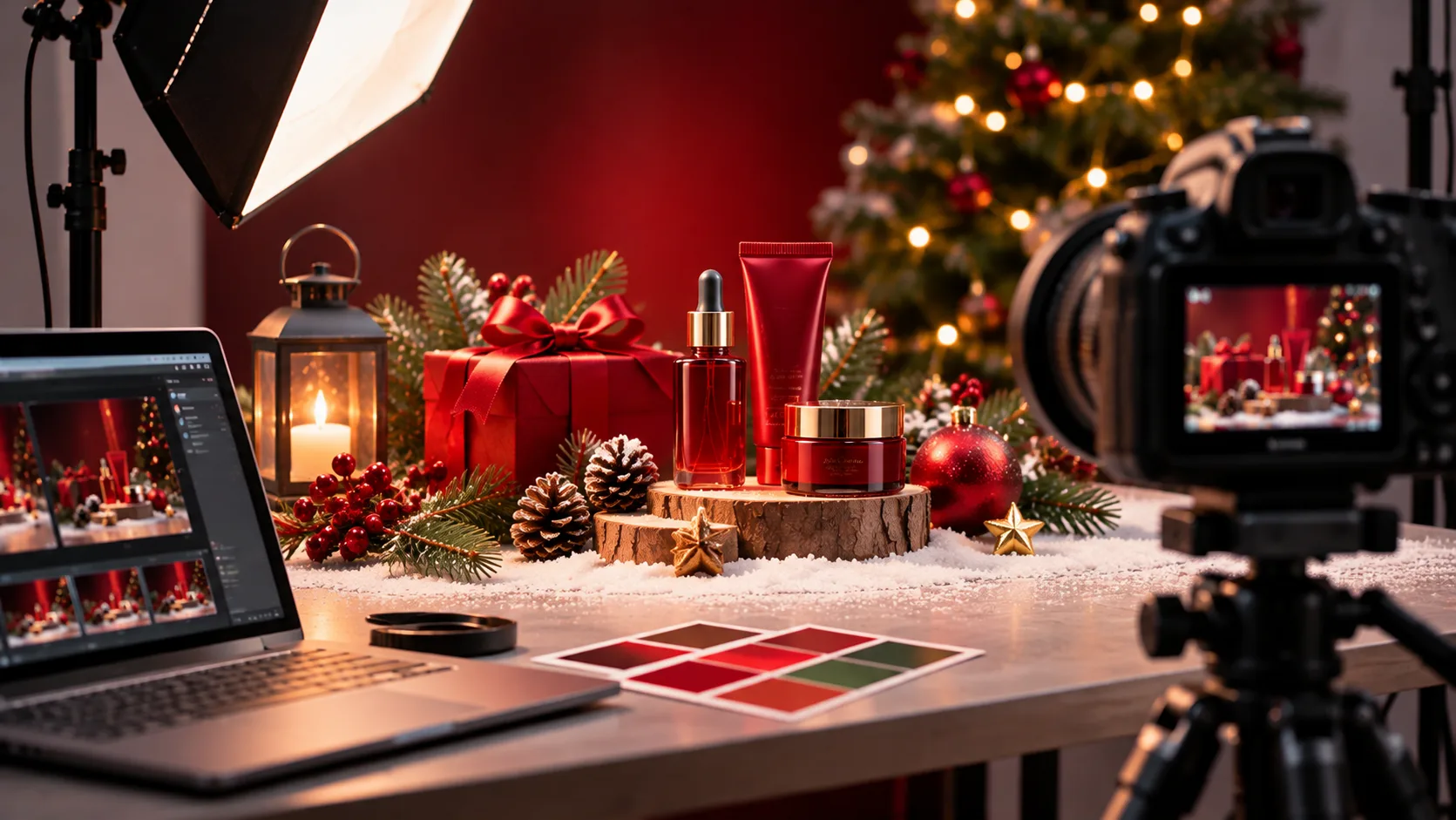
5. Create the Right Lighting Setup
Lighting determines how the product, materials, textures, and seasonal decorations appear in the final photograph.
Christmas product photography often combines soft illumination with carefully controlled highlights to create depth and atmosphere.
The lighting setup should depend on the product and the desired visual style.
Use Soft Light for Clear Product Details
A large softbox or diffused light source can help reduce harsh shadows and produce even illumination.
This is useful for products with reflective packaging, delicate surfaces, or detailed labels.
A simple setup may include:
One key light positioned at an angle to the product.
A reflector or fill light to control shadows.
A background light when additional separation is needed.
Diffusion to soften reflections and highlights.
Use Directional Light for Depth
Directional lighting can create stronger shadows and more dramatic compositions.
This approach may work well for luxury gift boxes, glass bottles, dark packaging, and premium products.
The position of the light should reveal the product's shape and surface details without creating distracting reflections.
Add Christmas Lights Carefully
Small decorative lights can create warm points of light in the background.
When placed out of focus, they can produce a soft bokeh effect that adds a festive atmosphere.
Keep these lights separate from the main product lighting whenever possible. This allows you to control the exposure and preserve product details.
6. Choose the Right Camera Angles and Composition
Camera angle influences how customers perceive a product and how the seasonal scene is organized.
The best angle depends on the product's shape, packaging, and the information that needs to be visible.
Front-Facing Product Shots
A front-facing angle works well when the packaging, label, or main product design needs to remain clearly visible.
It is especially useful for e-commerce images and promotional graphics.
Three-Quarter Angles
A three-quarter view reveals more of the product's shape and creates a sense of depth.
This angle is useful for gift boxes, bottles, electronics, cosmetics, and packaged products.
Overhead Photography
Overhead photography is useful for arranging several products and decorative elements within a single composition.
It works well for gift sets, food products, Christmas hampers, and flat-lay arrangements.
Close-Up Photography
Close-up shots can highlight details such as packaging textures, ribbons, decorative finishes, and product materials.
They are particularly useful as supporting images in a campaign or product gallery.
Leave Space for Promotional Text
If the images will be used for digital advertisements or social media campaigns, consider leaving negative space in the composition.
This allows designers to add a headline, price, or promotional message without covering the product.
Plan this space during the shoot rather than trying to create it through extensive cropping later.
7. Photograph Different Product Categories for Christmas
Not every product requires the same lighting, styling, or composition.
The creative approach should reflect the characteristics of the item and the expectations of its audience.
Beauty and Skincare Products
Beauty products often benefit from clean compositions, controlled reflections, and carefully selected textures.
Glass bottles, jars, and metallic packaging may require additional attention to lighting.
Christmas styling can include elegant gift boxes, subtle ornaments, fabric surfaces, and seasonal color accents.
Food and Beverage Products
Food photography focuses on texture, freshness, presentation, and atmosphere.
Seasonal ingredients, festive table settings, warm lighting, and complementary decorations can help communicate the holiday experience.
For packaged food products, ensure the packaging remains visible and recognizable.
Fashion and Accessories
Fashion products can be photographed through editorial compositions, styled product arrangements, or lifestyle scenes.
Scarves, bags, shoes, jewelry, and other accessories can be presented alongside gift packaging and seasonal materials.
The styling should reflect the brand's positioning rather than relying on generic Christmas decorations.
Electronics and Technology
Technology products often require a more structured and minimal approach.
Clean backgrounds, controlled reflections, sharp details, and carefully placed lighting can create a polished result.
A few seasonal elements, such as a gift box or subtle lighting accents, can establish the Christmas context without distracting from the product.
Gift Sets and Bundles
Gift sets are particularly suitable for Christmas product photography.
Arrange the items so that customers can clearly see what is included. Use different heights, controlled spacing, and complementary props to create a balanced composition.
Photograph the full set as well as individual items when the images will be used across an e-commerce product page.
8. Use a Professional Photography Studio for Better Control
A professional photography studio offers a controlled environment for creating consistent seasonal product images.
This is particularly useful when a campaign includes multiple products, different setups, or several content formats.
Benefits of a Studio Setup
Controlled Lighting
A studio allows photographers to position and adjust lighting according to the product and creative direction.
Flexible Backgrounds
Different backgrounds and surfaces can be prepared without changing the entire shooting environment.
Organized Product Styling
Props, decorations, and products can be arranged and adjusted more efficiently.
Consistent Results
When photographing a large collection, maintaining similar lighting and composition helps create a unified visual identity.
Efficient Production
A planned studio setup can support multiple products and creative variations within the same production session.
For businesses that do not have dedicated photography facilities, renting a professional studio can provide access to the space and equipment needed for seasonal campaigns.
9. Plan for Multiple Content Formats
Christmas product photography is often used across several marketing channels.
The images should therefore be planned according to their intended use.
E-commerce Product Pages
Product pages usually require clear, detailed images that show the product accurately.
Include clean product shots alongside seasonal images where appropriate.
Social Media
Social media content can use more expressive compositions, close-ups, lifestyle scenes, and creative arrangements.
Prepare different crops and aspect ratios for feed posts, Stories, and other placements.
Digital Advertising
Advertising images need to communicate the product and promotional message quickly.
Leave enough space for text and ensure the product remains visible on smaller screens.
Email Campaigns
Email marketing images should fit the layout and support the main promotional message.
Use consistent photography and color treatment to connect the email with the wider Christmas campaign.
Planning these requirements before production can reduce the need for additional photography sessions.
10. Edit Images While Preserving Product Accuracy
Post-production helps refine Christmas product images and create a consistent final appearance.
However, editing should improve the photograph without changing the actual appearance of the product.
Important Post-Production Tasks
Adjust exposure and white balance.
Correct color inconsistencies.
Refine contrast and highlights.
Remove distracting dust or small imperfections.
Improve background consistency.
Retouch unwanted reflections where appropriate.
Prepare different crops and aspect ratios.
Export images in suitable formats and resolutions.
Pay particular attention to product colors. If the image shows a different color from the actual item, customers may develop incorrect expectations.
For e-commerce photography, accuracy should remain a priority even when the image includes creative seasonal styling.
11. Avoid Common Christmas Product Photography Mistakes
Using Too Many Decorations
An overcrowded scene makes it harder for customers to focus on the product.
Choose a few complementary props and organize them around the main subject.
Ignoring the Product's Actual Colors
Strong seasonal lighting can create unwanted color casts, especially on white packaging and reflective materials.
Use controlled lighting and check the white balance during the shoot.
Creating Inconsistent Images
When photographing a collection, changing backgrounds, lighting, and composition too frequently can make the final images feel disconnected.
Establish a visual reference before shooting the full product range.
Hiding Important Product Details
Ribbons, ornaments, and decorations should never cover essential labels, product features, or packaging information.
Relying Only on Traditional Christmas Colors
Red and green are recognizable, but they are not suitable for every brand.
Explore alternative palettes that match the brand's identity and positioning.
Forgetting the Final Placement
An image designed for a website may not work as a vertical social media advertisement.
Plan the intended formats and compositions before the photoshoot.
Christmas Product Photography Checklist
Before starting your photoshoot, make sure you have prepared the following:
Define the creative direction.
Select a color palette.
Choose suitable backgrounds and surfaces.
Prepare seasonal props and decorations.
Clean and prepare all products.
Plan camera angles and compositions.
Set up and test the lighting.
Prepare space for promotional text where needed.
Capture both individual products and group arrangements.
Photograph different formats and crops.
Review color accuracy and product details.
Edit and export images for each marketing channel.
Final Thoughts
Christmas product photography gives brands an opportunity to present their products in a seasonal context while creating visual content for one of the busiest promotional periods of the year.
Successful festive images depend on more than decorative props. They require a clear creative direction, thoughtful composition, controlled lighting, suitable backgrounds, and consistent post-production.
Whether you are photographing a single gift product or an entire seasonal collection, planning the shoot around the brand's identity and marketing requirements can make the final content more effective.
At Helio, professional studio facilities and creative production services can help businesses prepare product photography and visual content for seasonal campaigns. With the right planning and execution, Christmas product images can support a consistent and engaging brand experience across digital channels.
Planning a Christmas product photoshoot? Visit helio.ae to explore studio and creative production services for your next campaign.
Frequently Asked Questions
What is Christmas product photography?
Christmas product photography is the process of photographing products using seasonal styling, backgrounds, lighting, and props to create images for holiday marketing campaigns, e-commerce stores, and promotional content.
What props are best for Christmas product photography?
Common props include Christmas ornaments, gift boxes, ribbons, pine branches, candles, seasonal fabrics, decorative lights, and festive tableware. The best props depend on the product and the brand's visual direction.
What colors work best for Christmas product photography?
Traditional colors include red, green, gold, silver, and white. However, brands can also use alternative palettes such as cream and gold, deep green and burgundy, or white and silver.
What lighting is best for Christmas product photography?
Soft, diffused lighting is useful for clear product details, while directional lighting can create depth and atmosphere. Small decorative lights can also be used in the background to create a festive bokeh effect.
Can Christmas product photography be done in a professional studio?
Yes. A professional photography studio provides a controlled environment for lighting, backgrounds, props, and product arrangements. It is particularly useful for businesses photographing multiple products or preparing a complete seasonal campaign.
How do you make Christmas product photos look professional?
Start with a clear creative direction, use a balanced color palette, select appropriate props, control reflections and shadows, and keep the product as the main subject. Consistent editing also helps create a professional result.
What aspect ratio should Christmas product images use?
The aspect ratio depends on where the image will appear. Square and portrait formats are commonly used for social media, while landscape images may be suitable for website banners and some advertising placements. It is best to prepare different versions for the intended channels.
When should businesses prepare Christmas product photography?
Businesses should plan seasonal photography well before their Christmas campaign launches. Early preparation provides enough time for creative development, product styling, production, editing, approvals, and campaign distribution.